
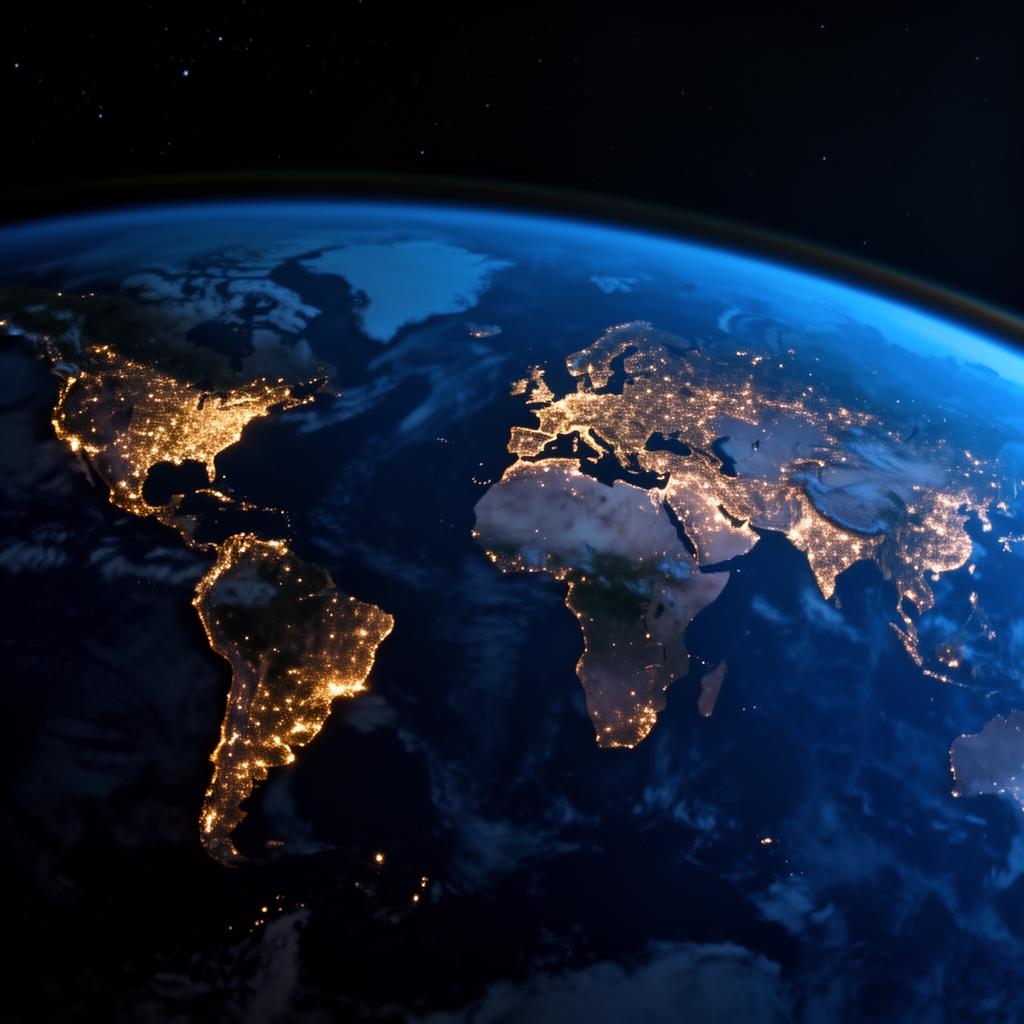
What Is Happening in the World Right Now?
You opened this page a few seconds ago. In that time, roughly seventeen babies drew their first breath. About four people quietly stopped breathing forever. Somewhere over the Pacific, a meteor burned up in the atmosphere, visible to no one. Three hundred thousand emails found their way to inboxes. A forest the size of a football pitch disappeared.
None of this waited for you to notice.
The world operates at a tempo that human senses were never built to register. We evolved to track a handful of people across a few square kilometers. We are wired for the village, not the planet. And yet here we are, eight billion strong, generating data at a rate that would have seemed like science fiction just two decades ago.
This article is an attempt to slow down the blur. To take global activity, break it into categories, and hold each one up to the light long enough to see what is actually happening during an ordinary minute on Earth.
The Scale You Cannot Feel
There is a particular kind of vertigo that comes from confronting large numbers. Not confusion, exactly, but a quiet failure of imagination. When someone tells you that seven thousand languages are spoken on Earth, or that your body contains thirty-seven trillion cells, or that the sun converts four million tons of matter into energy every second, you nod. You accept. But you do not truly feel it.
Psychologists call this scope insensitivity. A thousand deaths and a hundred thousand deaths produce roughly the same emotional response. Our empathy circuits top out early. The difference between a million and a billion is, emotionally speaking, almost nothing. Both are just large.
Real-time data does something unusual to this problem. When you watch a counter climb, your brain processes each increment as an event. Not a statistic. An event. The number 4.3 births per second is a fact you can memorize. But watching a counter tick past fifty while you read a single paragraph is an experience you remember.
This is why live counters exist. Not because the data is new. Most of these statistics have been published for years in dense reports nobody reads. They exist because the format changes what the numbers can do to you.
Population: A Species in Fast-Forward
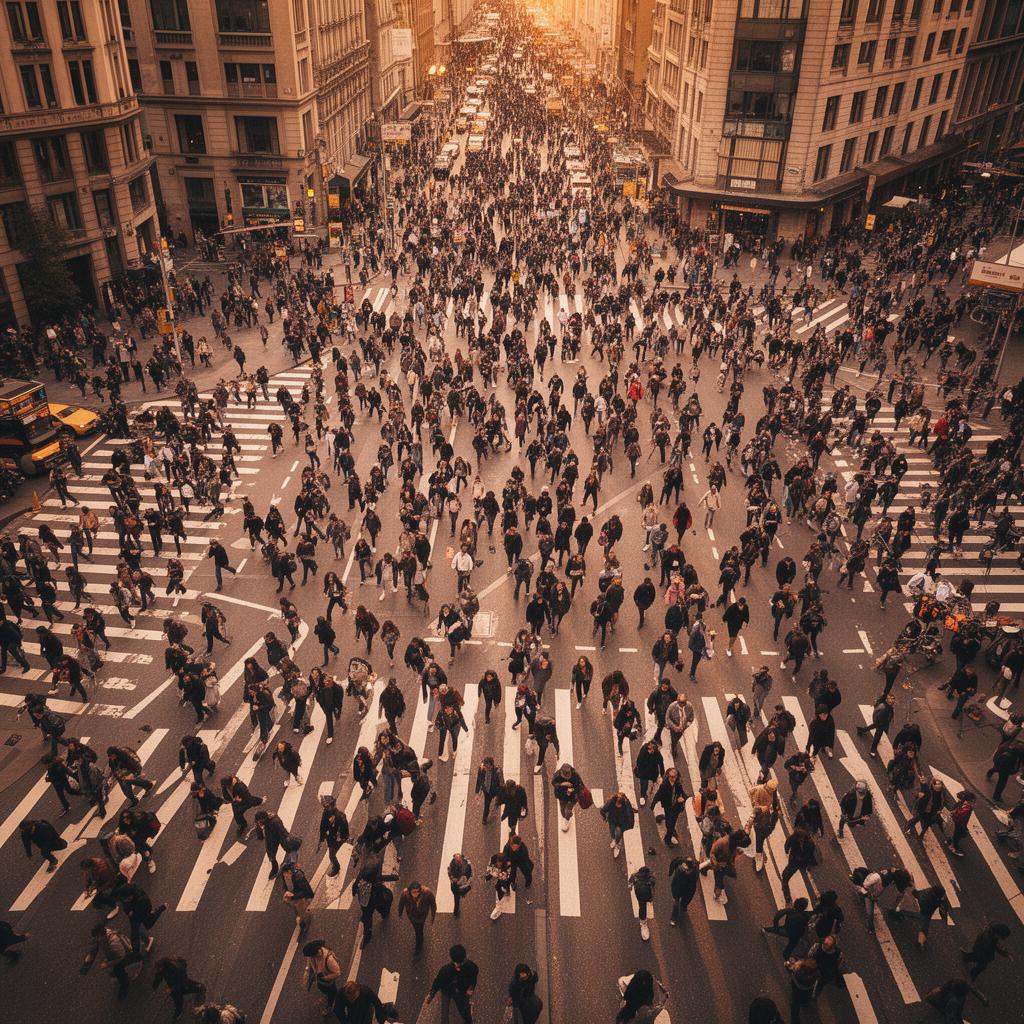
The global population crossed eight billion in late 2022. It took all of human history to reach one billion, around 1804. The second billion arrived in 123 years. The third in 33 years. The fourth in 14. We have been adding roughly a billion people every twelve to fifteen years, though the rate is finally, slowly, decelerating.
Right now, approximately 4.3 people are born every second. About 1.8 die. The net gain is roughly 2.5 people per second, or about 216,000 per day, or about 80 million per year. That is roughly the population of Germany appearing on Earth every twelve months.
To feel this, consider that in the time it takes to read this section, maybe two minutes, around 300 new humans have arrived. They are mostly in Sub-Saharan Africa and South Asia. Some were born in hospitals with clean water and electricity. Some were born in rooms lit by kerosene lamps. All of them started breathing the same air.
The population counter is the one that tends to stop people in their tracks. Not because the number itself is surprising, but because watching it climb gives the abstraction a pulse.
The Internet Never Sleeps
In one second on the internet: 4.5 million emails are sent. 158,500 Google searches are completed. 1,800 Uber rides begin. 9,700 tweets are posted. Seventy thousand hours of Netflix content are streamed. And roughly 500 hours of video are uploaded to YouTube.
These numbers exist in a realm beyond human-scale comprehension. If you tried to watch all the YouTube videos uploaded in a single day, it would take you over sixty years of continuous viewing. The internet produces more written words per day than existed in every library on Earth combined until roughly 1997.
What makes this fascinating is not the volume but the velocity. The internet does not accumulate the way a library does. It churns. Most emails are deleted within hours. Most tweets are forgotten within minutes. We are building, in real time, the largest ephemeral structure in human history.
If you open the internet activity counters and watch the email counter, you will notice something strange: it moves so fast it becomes almost hypnotic.
The Planet Is Keeping Score
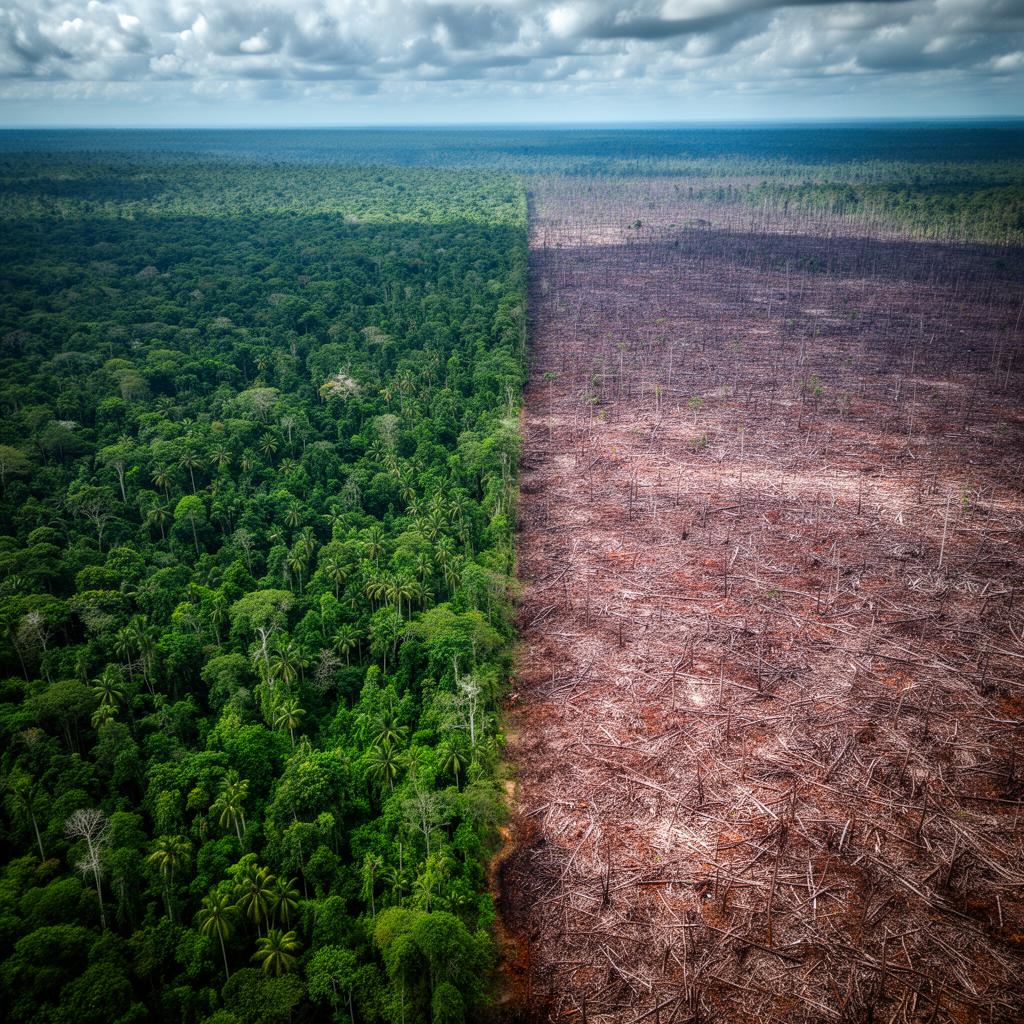
Every second, humanity emits approximately 1,200 metric tons of carbon dioxide. That is not a typo. Twelve hundred tons. Every second. By the time you finish this article, we will have added roughly half a million tons of CO2 to the atmosphere.
Meanwhile, 2.4 hectares of forest disappear every second. That is about four football pitches per minute. We lose roughly 10 million hectares of forest per year, an area the size of Iceland.
On the other side of the ledger, nature is working. About 10,000 lightning bolts strike Earth every minute, contributing to atmospheric chemistry. Five billion tons of rain fall on the planet every hour.
The environment counters are the ones that provoke the most complicated emotions. The counters that track damage still move faster than the counters that track repair. That gap is the story of the century.
Money Moves Faster Than You Think

The global economy generates approximately $3.3 million in GDP every second. Global debt increases by about $8,100 per second. The stock market processes roughly 7,700 trades per second across all exchanges.
Money, in its modern form, has become almost entirely abstract. Over ninety percent of the world's currency exists only as digital entries in databases. The physical bills and coins you carry represent a tiny fraction of the money supply.
This abstraction is what allows the economy to move at its current speed. Currency markets trade $7.5 trillion per day, roughly 25 times the annual GDP of the United Kingdom.
The economy counters reveal an uncomfortable truth: the financial system has become a kind of weather. It is too large, too fast, and too complex for any individual or institution to fully comprehend.
Health: The Body of Humanity

Right now, across all 8.3 billion of us, roughly 9.7 billion heartbeats occur every second. About 380,000 people will visit a hospital in the next hour. Some will leave the same day. Some will not leave at all.
Every second, approximately 3 vaccinations are administered somewhere on Earth. About 16,000 steps are walked per second in organized exercise alone. Roughly 4 babies are delivered by cesarean section every second.
Health statistics carry a unique emotional weight because they are personal. When you see a counter showing 9.7 billion heartbeats per second, you can feel yours among them.
The health section is also where the optimism lives. Vaccine distribution has accelerated dramatically. Infant mortality rates have halved since 1990. Life expectancy remains on a long upward trend.
Space: The Stage We Forget We Are On
While you read this, Earth is moving through space at 107,000 kilometers per hour relative to the Sun. The Sun itself is orbiting the center of the Milky Way at 828,000 kilometers per hour. You are, right now, traveling faster than you have ever traveled and feeling absolutely nothing.
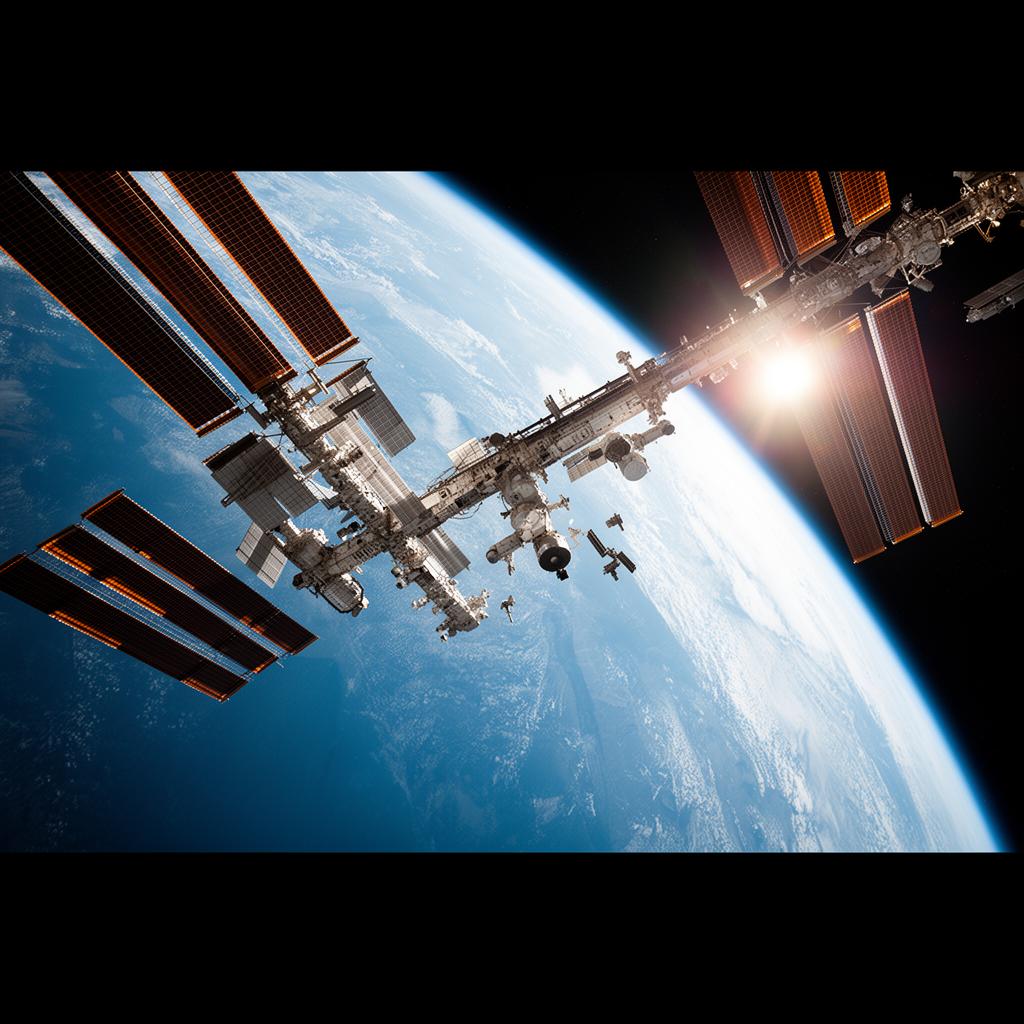
Closer to home, the International Space Station is completing an orbit every 90 minutes. Below it, roughly 2,500 meteors are entering the atmosphere every hour, most no larger than a grain of sand.
Space counters provide something the other categories cannot: perspective. It is hard to feel anxious about your inbox when you realize Earth has traveled thousands of kilometers since you opened this page.
Why Real-Time Data Changes Perspective
There is a difference between knowing something and experiencing it. Real-time counters exploit a cognitive principle called the experience gap. When information is presented as a static number, your brain files it away. When presented as a moving counter, your brain treats it as an event and pays attention.
This is why tools like SnapCounters are more than novelties. They are a format for understanding. Read more about the psychology behind real-time data.
The Numbers After You Leave
When you close this page, everything described here will continue. The babies will keep arriving. The emails will keep sending. The forests will keep shrinking. The ISS will keep orbiting.
The only thing that will change is your awareness of it.
But here is the thing about attention: where you direct it shapes what you care about. And what you care about shapes what you do. A minute spent watching global counters will not change the world. But it might change what you notice about it.
And noticing, historically, is where change begins.