
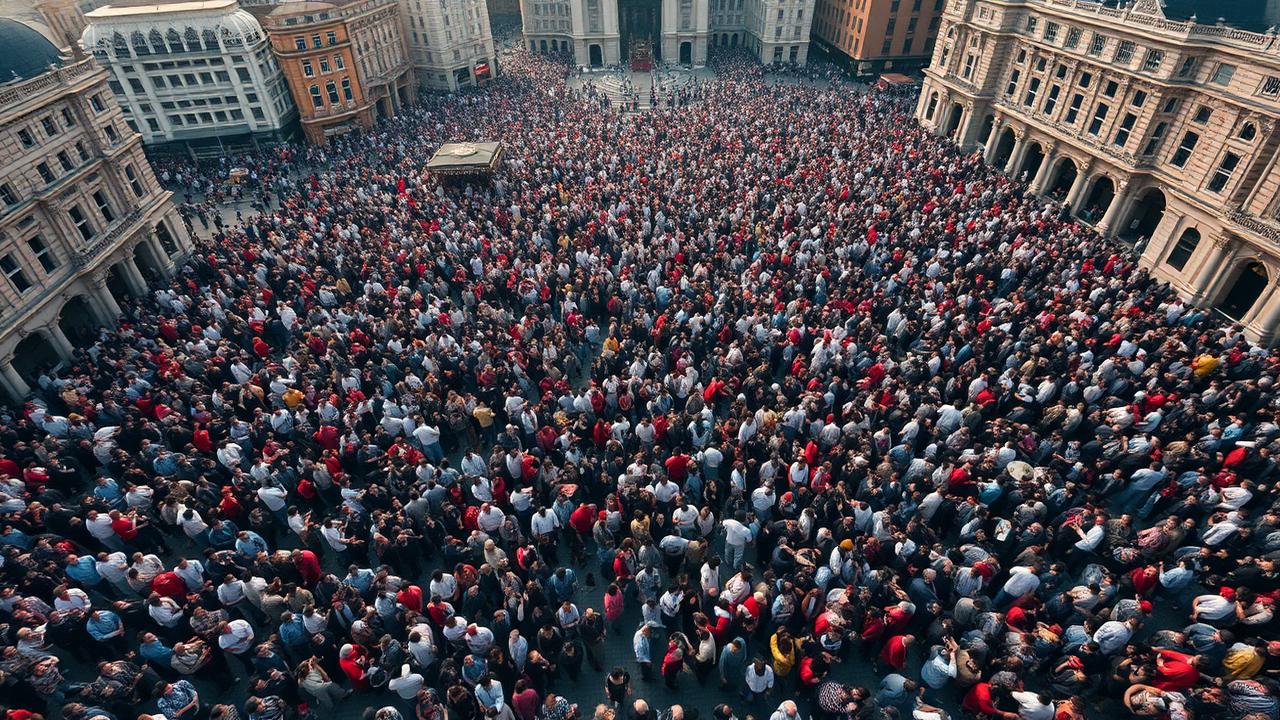
How Many People Are Alive Right Now?
The answer changes before you finish reading it. By the time your eyes reach the end of this sentence, the world has gained another person. Maybe two. The number never holds still.
As of 2026, approximately 8.2 billion people are alive on Earth. That is the short answer. The longer answer involves understanding a number so large that the human brain was never designed to process it, a growth rate that is simultaneously accelerating and decelerating depending on where you look, and a question that sounds simple but opens into something far more complex than most people expect.
The Number Right Now
The global population stands at roughly 8.2 billion. Every second, approximately 4.3 babies are born and 1.8 people die. The net gain is about 2.5 people per second, 150 per minute, 9,000 per hour, and 216,000 per day.
To put that daily number in perspective: 216,000 is roughly the population of a city like Richmond, Virginia, or Amarillo, Texas. Every single day, a new mid-sized city appears on the planet. Every five days, a population the size of a million materializes from nothing.
These are not projections. These are averages derived from birth and death rates tracked by the United Nations Population Division, the World Bank, and dozens of national statistical agencies. The count is never exact — no census captures every person in real time — but the estimates are remarkably precise, refined over decades of demographic modeling.
If you want to watch the number move, SnapCounters shows it live. The counter starts at zero when you arrive and accumulates births and deaths in real time based on global averages. It is oddly hypnotic.
How We Got Here This Fast
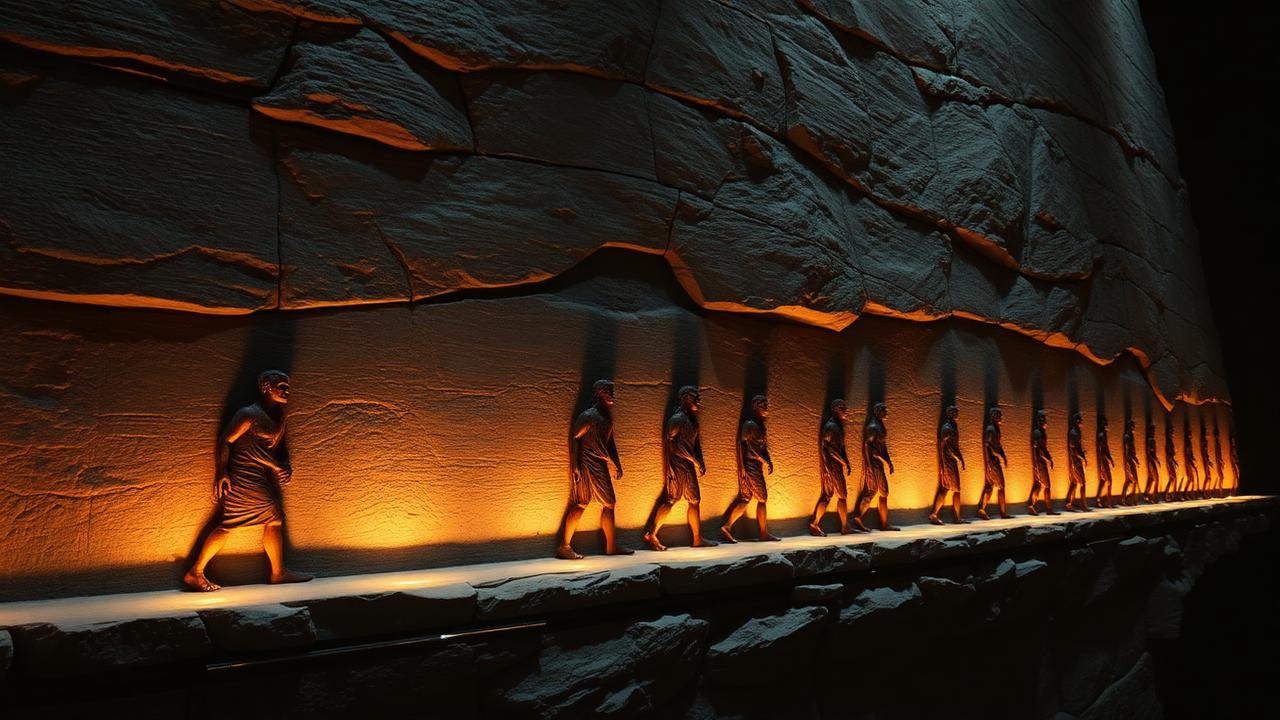
For most of human history, population growth was negligible. The first billion took approximately 200,000 years to reach — essentially the entire span of Homo sapiens as a species. The second billion arrived in 1927, just 123 years later. The third in 1960. The fourth in 1974. Each billion came faster than the last, driven by advances in agriculture, sanitation, and medicine that slashed mortality rates long before birth rates caught up.
The peak growth rate occurred around 1968, when the global population was expanding at 2.1 percent per year. That might sound modest, but at that rate, the population doubles every 33 years. Since then, the rate has fallen to roughly 0.9 percent. The absolute number of people added each year peaked around 2012 at approximately 89 million and has been slowly declining since.
This is one of the most important facts about the modern world that almost nobody discusses. The population is still growing, but the growth is decelerating. The United Nations projects that the global population will peak somewhere between 10 and 11 billion around 2080, then begin a slow decline.
The slowdown is driven almost entirely by falling fertility rates. In 1960, the average woman had 5.0 children. Today, that number is approximately 2.3 — barely above the replacement rate of 2.1. In dozens of countries, it has fallen well below replacement. South Korea's fertility rate is below 0.8, the lowest ever recorded for a nation.
Where Everyone Lives
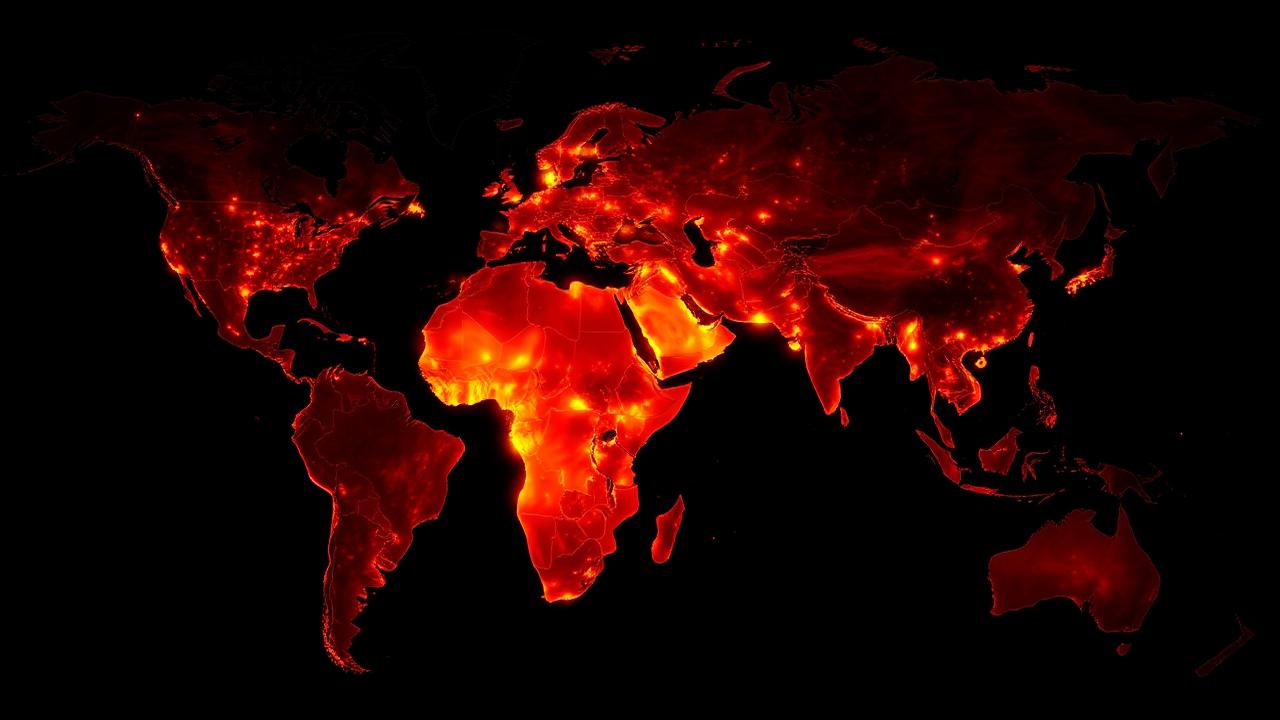
The distribution of 8.2 billion people across the planet is spectacularly uneven. Asia contains roughly 60 percent of all living humans. India alone has surpassed 1.4 billion, overtaking China in 2023. Africa accounts for about 18 percent and is growing faster than any other continent.
Meanwhile, Europe's population has essentially plateaued. Japan loses roughly 500,000 people per year. Russia's population has been declining since the early 1990s. The world is simultaneously experiencing a baby boom and a birth drought, depending entirely on geography.
Urban concentration adds another layer. More than 56 percent of the world's population now lives in cities, and that proportion is expected to reach 68 percent by 2050. Tokyo's metropolitan area alone contains 37 million people — more than the entire population of Canada.
The ten most populous countries — India, China, the United States, Indonesia, Pakistan, Nigeria, Brazil, Bangladesh, Russia, and Ethiopia — account for roughly 58 percent of the global population. The remaining 42 percent is spread across nearly 185 other countries.
What the Number Feels Like
Eight point two billion is a number that resists human intuition. If you counted to it at one number per second, without sleeping or eating, it would take approximately 260 years. If every person alive today stood in a line, the line would stretch to the Moon and back more than five times.
But perhaps the most effective way to feel the scale is to watch it change. A static number on a page is abstract. A counter that moves — that adds one, then another, then another, relentlessly — turns a statistic into something closer to experience. You begin to feel the weight of arrival.
The question "how many people are alive right now" has a precise numerical answer. But the real answer is something closer to: more than you can imagine, arriving faster than you think, distributed more unevenly than you assumed, and slowing down in ways that will reshape the century.
The number right now is 8.2 billion. By the time you read this, it is already wrong.