
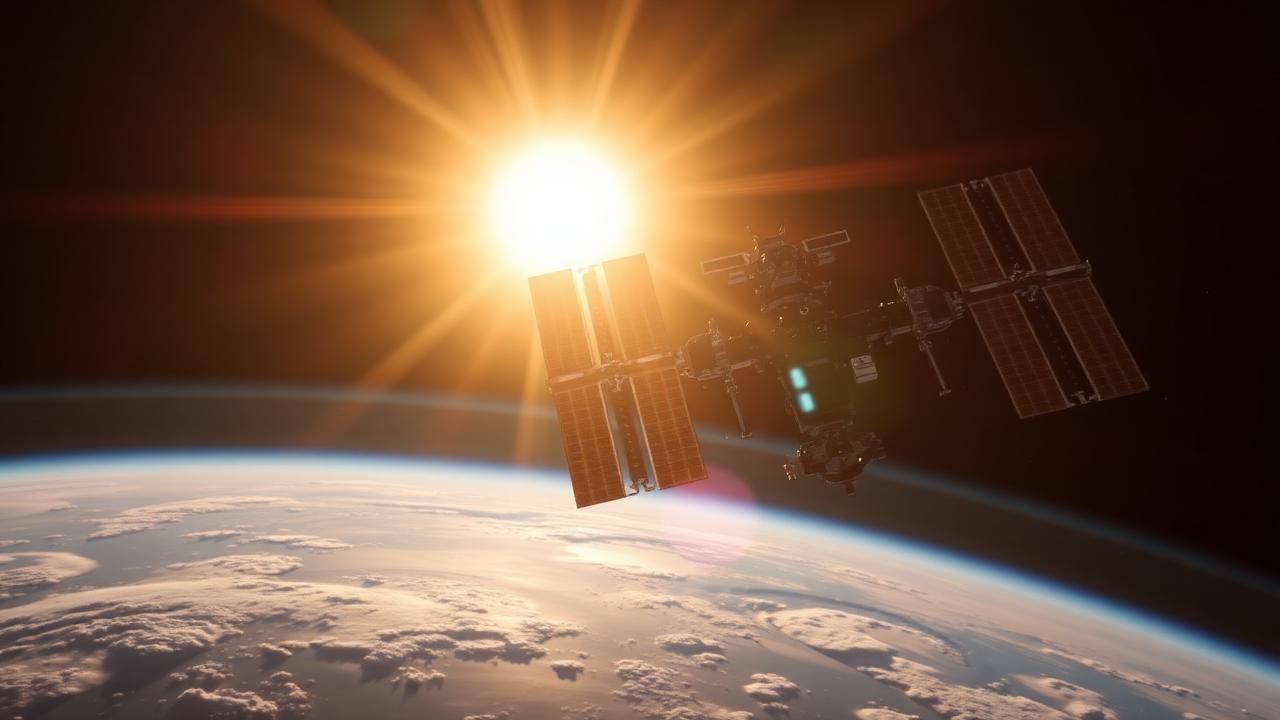
How Fast Is the ISS Moving Right Now?
Right now, roughly 408 kilometers above your head, six or seven human beings are hurtling through space at 27,600 kilometers per hour. They do not feel it. There is no wind, no turbulence, no sense of velocity. But every second, the International Space Station moves 7.66 kilometers — farther than most people drive in a minute.
The ISS completes one full orbit of Earth every approximately 90 minutes. That means the crew experiences 16 sunrises and 16 sunsets every 24 hours. By the time you have eaten breakfast, they have watched the sun rise and set twice.
The Speed
The ISS orbits at approximately 27,600 km/h, or 17,150 mph. In metric terms, that is 7.66 kilometers per second. A commercial aircraft cruises at roughly 900 km/h — the ISS travels about 30 times faster. A bullet from a high-powered rifle travels at approximately 2,700 km/h — the ISS is ten times faster than a bullet. The speed of sound at sea level is about 1,235 km/h. The ISS travels at Mach 22.
At ISS speed, you could travel from New York to Los Angeles in roughly 13 minutes. London to Tokyo in approximately 33 minutes. A complete circumnavigation of the Earth takes 92 minutes.
The ISS has been continuously occupied since November 2, 2000. In the more than 25 years since, it has traveled approximately 6.5 billion kilometers — roughly the distance from Earth to Pluto and back, twice.
What 7.66 Kilometers Per Second Feels Like
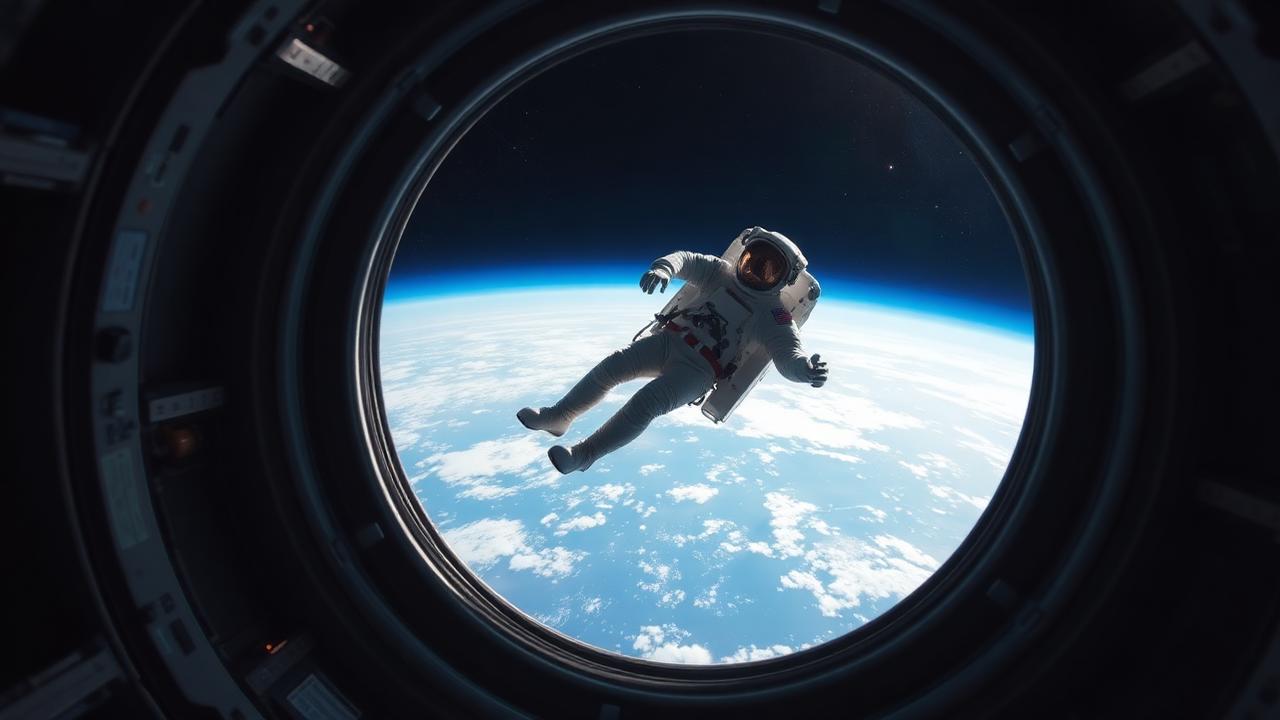
It feels like nothing. This is one of the strangest aspects of orbital velocity. On Earth, speed is synonymous with sensation — the wind in your face, the vibration of an engine, the G-forces pressing you into your seat. In orbit, all of that disappears.
The ISS is in perpetual freefall. It is falling toward Earth at the same rate that Earth's surface curves away beneath it. The result is weightlessness — not the absence of gravity, but the absence of any force to feel. The astronauts inside are traveling at 27,600 km/h and experiencing exactly the same sensation as floating in a pool.
An astronaut looking out the cupola module can watch an entire country pass beneath them in minutes. The United Kingdom slides past in roughly 30 seconds. The continental United States takes about four minutes. Africa, the second-largest continent, takes approximately five minutes.
Why It Has to Be That Fast
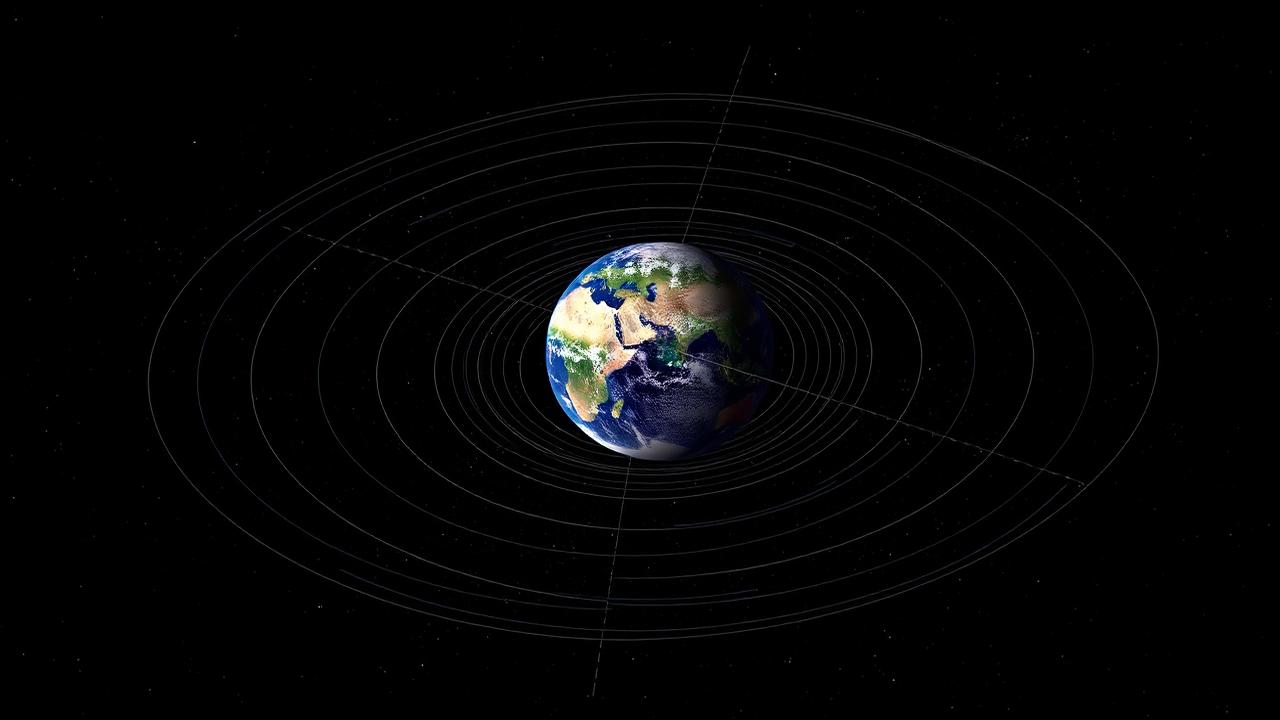
The ISS does not travel at 27,600 km/h by choice. It travels at that speed because it must. Orbital mechanics requires any object at the ISS's altitude of 408 kilometers to maintain a velocity of approximately 7.66 km/s to avoid falling back to Earth.
The relationship between altitude and required orbital velocity is inverse: the higher you go, the slower you need to travel to maintain orbit. Geostationary satellites, orbiting at 35,786 kilometers, travel at only about 3.07 km/s — less than half the ISS's speed — but they orbit much farther from Earth.
If the ISS slowed down significantly, it would begin to lose altitude and eventually re-enter the atmosphere. This actually happens naturally due to atmospheric drag. Even at 408 kilometers, there are enough residual air molecules to create friction. The ISS loses approximately 2 kilometers of altitude per month and must periodically fire its thrusters to reboost. Without them, the ISS would re-enter the atmosphere within approximately 12 to 18 months.
The View from 408 Kilometers
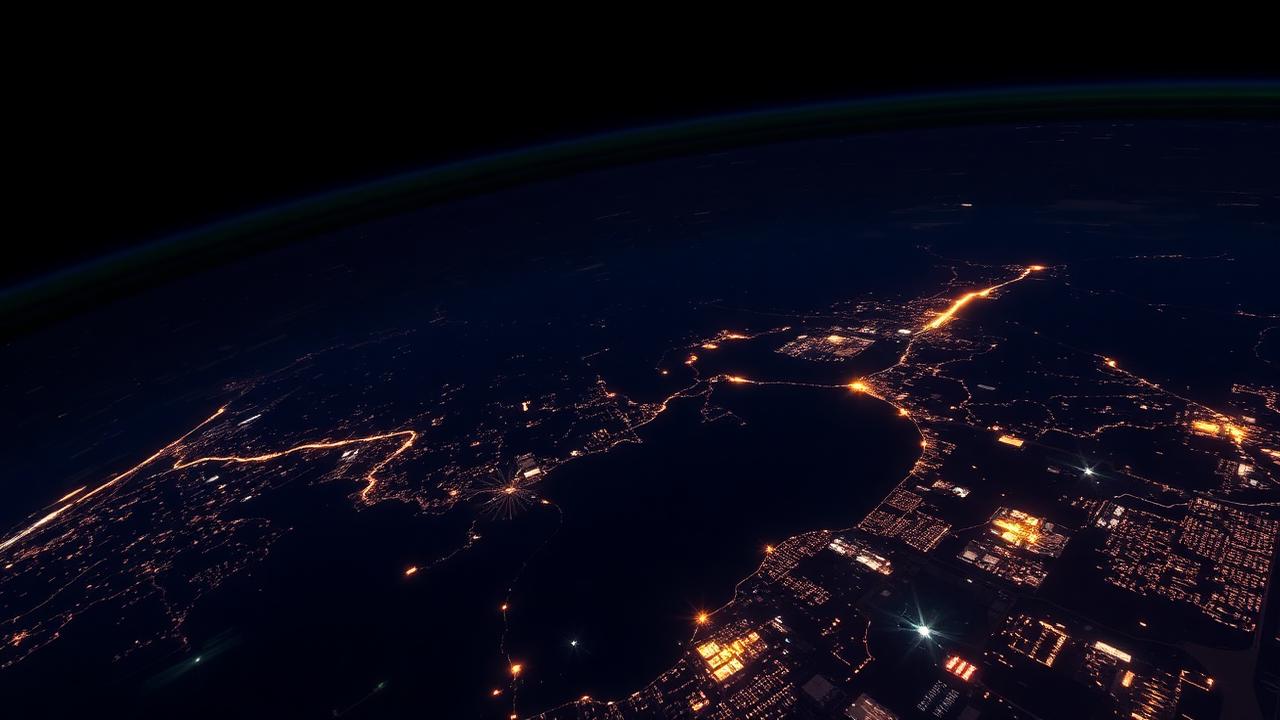
At ISS altitude, the curvature of the Earth is unmistakable. The atmosphere appears as a thin, luminous blue line along the horizon — startlingly fragile when seen from above. Astronauts consistently describe the view as life-changing, a phenomenon known as the "overview effect."
From 408 kilometers up, you can see weather systems spanning entire ocean basins. Lightning storms appear as silent flickers across dark continents. City lights trace the outlines of civilization at night — coastlines, river valleys, transportation corridors rendered visible by the collective glow of billions of light bulbs.
The ISS is visible from the ground with the naked eye. It appears as a bright, fast-moving point of light crossing the sky in three to six minutes. It is the third-brightest object in the night sky, after the Moon and Venus. You can track the station's orbital distance and other space data in real time on SnapCounters.
Right now, the ISS is overhead somewhere. Its crew is watching the Earth turn beneath them, traveling faster than a bullet, feeling nothing. In the next 90 minutes, they will see the entire planet. Then they will see it again.