Water Withdrawal vs. Consumption: What's the Difference?
Quick answer
Water withdrawal is water taken from a river, reservoir or aquifer. Consumption is the portion no longer readily available for reuse within the relevant accounting boundary, for example through evaporation or crop transpiration. Much withdrawn water can return after use. A large withdrawal therefore does not imply equal consumption, and neither figure alone establishes local water scarcity.
About 122 million litres per second · 2022 baseline
litres of freshwater withdrawn since you opened this article
Modelled estimate at About 122 million litres per second · 2022 baseline. The visual total updates once per second.
Models 3,855 km³ of annual freshwater withdrawal, not consumption or permanent loss from Earth. Actual flows vary by season and location.
FAO AQUASTAT 2025 Water Data Snapshot · reference year 2022Water withdrawal is water taken from a source, such as a river, reservoir or aquifer. Water consumption is the portion that is not readily available for reuse because it evaporates, is transpired by plants, becomes incorporated into products or otherwise leaves the relevant water environment. A large withdrawal therefore does not necessarily mean an equally large amount is consumed.
This distinction matters whenever a headline, utility report or global counter says water is being “used.” The word can describe different quantities, and those quantities answer different questions.
What counts as a water withdrawal?
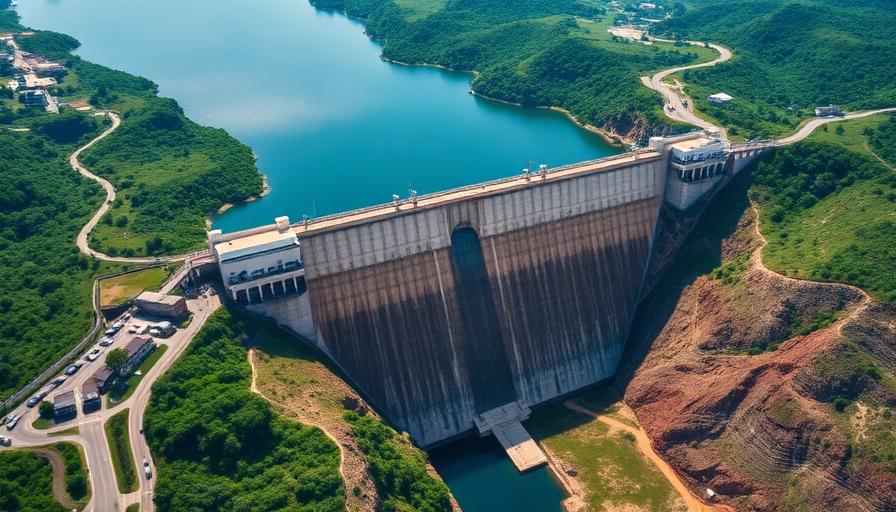
A withdrawal occurs when water is removed from a surface-water or groundwater source for a purpose. A utility pumping groundwater for homes, a farm diverting river water for irrigation and a power station taking cooling water from a lake all make withdrawals.
The US Geological Survey defines withdrawals and consumptive use separately in Estimated Use of Water in the United States in 2015, published in 2018. Its terminology is useful beyond the United States, although its national statistics should not be treated as global measurements.
Withdrawal measures the amount taken from the source, not what ultimately happens to it. Some withdrawn water may evaporate. Some may reach a wastewater treatment plant. Some may return to a river or seep into groundwater.
It is also important to distinguish withdrawal from delivery. A water supplier withdraws water from the environment and then delivers it to customers. Adding the supplier's withdrawal to every customer's delivery would count the same water at different stages of its journey.
The UN's System of Environmental-Economic Accounting 2012—Central Framework, published in 2014, explicitly distinguishes flows from the environment, flows within the economy and flows back to the environment. That accounting structure helps prevent these stages from being confused.
What counts as water consumption?
Consumption concerns what is no longer readily available for reuse within the relevant accounting setting. Common pathways include evaporation, transpiration by crops and incorporation into products.
“Consumed” does not mean that the water molecules have been destroyed. Evaporated water remains part of the water cycle, but it is no longer available in the original river, reservoir or aquifer for an immediate downstream use. It may return as precipitation somewhere else or much later.
The USGS definition also includes water that is otherwise not available for immediate use. One detail is easy to miss: USGS states that water returned to a different watershed from the one it was taken from (an interbasin transfer) is not counted as consumptive use. The source basin still loses that water, so a basin-level account can show a pressure that the national consumptive-use figure does not.
Consumption is therefore an accounting term, not a synonym for drinking. Agricultural water consumed through crop transpiration, for example, is not water swallowed by a person, but it is still consumptive use.
Nor is consumption automatically waste. Water transpired while growing food can be serving its intended purpose. Whether a particular use is desirable or efficient requires a separate judgment about benefits, alternatives and environmental consequences.
How do withdrawal, return flow and consumption fit together?
A return flow is water discharged back to the environment after use. Examples include treated wastewater entering a river and cooling water discharged after passing through a facility.
For a simplified process with a clearly defined boundary and no change in stored water, the basic relationship is:
Withdrawal − return flow = consumption.
Real water accounts can require additional terms. A facility might receive water from another supplier, send water to another business or hold water in storage. A basin may import or export water. Those flows must be handled consistently before subtracting returns from withdrawals.
The practical lesson is to compare like with like. A withdrawal measured at a river intake and a discharge measured at a distant outlet do not automatically describe the effect on the river reach between them.
Time boundaries also matter. Water withdrawn during a dry period and returned after that period is not necessarily available when demand or ecological stress is greatest. An annual balance can conceal this timing problem.
This is why a useful water account states its geographical boundary, reporting period and treatment of storage and transfers, rather than presenting an unexplained total.
Why can cooling water have high withdrawals but lower consumption?
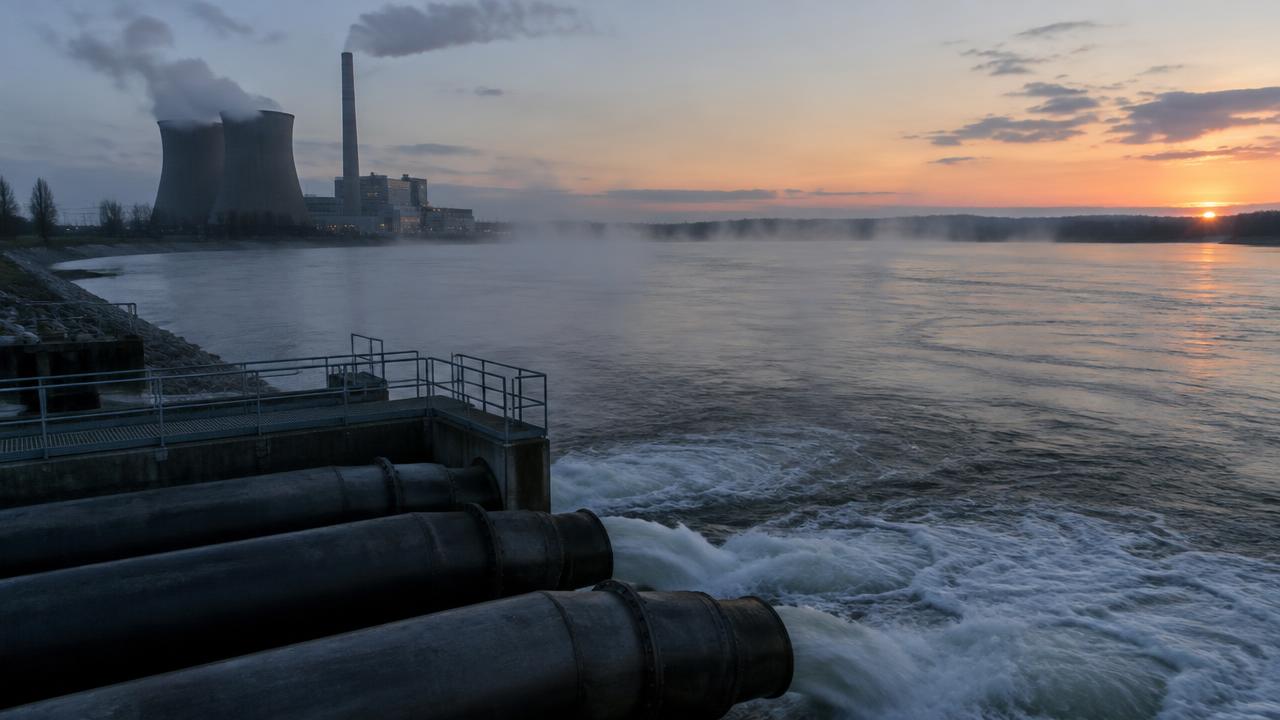
Thermoelectric power generation provides a useful example of why the distinction matters. Cooling systems can take in water, use it to absorb heat and return much of it to the environment.
The USGS report separates thermoelectric withdrawals from consumptive use and distinguishes cooling-system types. A once-through system passes cooling water through the facility before discharging it. A recirculating system reuses cooling water within the facility and needs replacement water for losses, including evaporation.
These arrangements have different withdrawal and consumption profiles. A comparison based only on intake volumes can therefore miss an important part of the picture.
Returned water also is not necessarily environmentally unchanged. Temperature and discharge location can matter even when much of the volume returns. Conversely, a system that reduces withdrawals can still consume water through evaporation.
The right question is not simply, “Which plant takes less water?” It is, “How much does it withdraw, how much does it consume, where does it return water, and under what conditions?” Those questions describe different pressures and should not be collapsed into a single label.
How does the distinction apply to irrigation and household use?
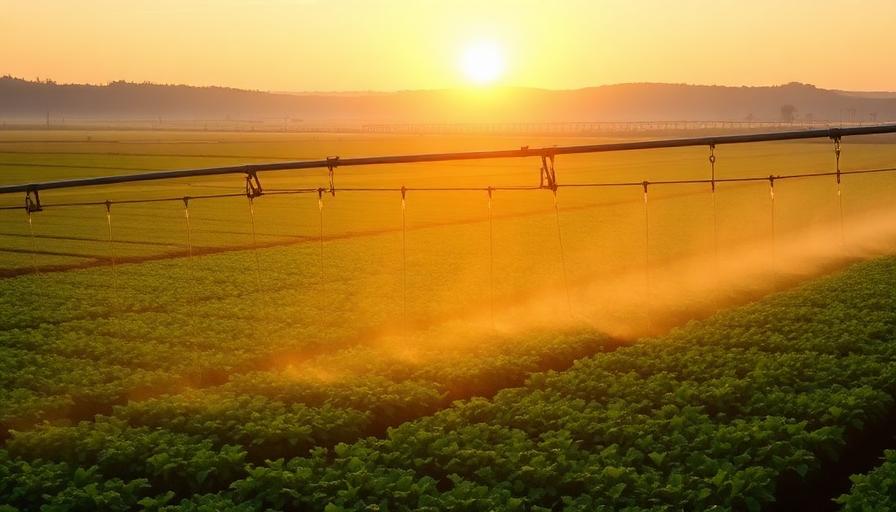
In irrigation, water may be transpired by crops, evaporate from soil or water surfaces, run off into drainage channels or infiltrate into the ground. These pathways do not all have the same accounting treatment.
Crop transpiration is consumptive use. Runoff or infiltration may contribute to return flows, depending on where the water goes and the boundary being studied. It would be misleading to assume that all water diverted to a farm is consumed, or that everything not transpired is immediately available to another user.
For households, the water delivered through a meter is also not the same thing as consumptive use. Water used indoors may enter a sewer and eventually return to the environment after treatment. Water applied outdoors may evaporate or be transpired by plants.
Actual outcomes depend on local plumbing, wastewater infrastructure, soils and drainage. A household bill generally tells you the volume supplied, not the complete environmental fate of that volume.
Reducing household demand can still be worthwhile even where return flows are substantial. Withdrawal, drinking-water treatment, distribution and wastewater handling are separate operational concerns. The distinction between withdrawal and consumption clarifies what a saving means; it does not make conservation irrelevant.
Which measure is better for understanding water scarcity?
Neither measure is sufficient on its own.
Withdrawal helps describe demand placed on a water source and the infrastructure needed to supply users. Consumption helps describe how much water is unavailable for further use within the relevant setting. Both need context about availability, seasonality, location and water quality.
The IPCC's Climate Change 2022: Impacts, Adaptation and Vulnerability, in its chapter on water, assesses water scarcity through interacting physical and human factors. A global volume cannot represent all of those conditions.
A withdrawal from an abundant source during a wet period and a similar withdrawal from a stressed source during a dry period should not be assumed to have equivalent consequences. Likewise, water returned below an ecologically sensitive river reach does not erase the effect of diverting it above that reach.
For a meaningful local comparison, look for withdrawals, consumption, return flows and information about the source itself. If a report offers only a total labelled “water use,” its definition is essential.
How should you read a global water-use counter?
The SnapCounters water-use counter measures withdrawals, not consumption. Its baseline is FAO AQUASTAT's world total freshwater withdrawal of about 3,855 cubic kilometres in 2022, spread evenly as roughly 10.6 trillion litres a day (3,855 km³ × 10¹² litres ÷ 365). Agriculture accounted for 71% of those withdrawals, industry 15% and services 13%. The counter is a mathematical estimate derived from that annual statistic, not a live measurement of pumps, taps or river diversions. Because much withdrawn water returns to rivers and aquifers, the counter's total is much larger than the amount consumed.
Before interpreting its total, check what the underlying statistic measures. Does “used” mean withdrawals, consumption or another defined flow? Does the baseline cover freshwater only, particular economic sectors or a broader set of sources? A changing display cannot resolve those definitional questions by itself. The food-waste definitions article offers another example: a total including bones and peels should not be described as edible food alone. In forests, tree cutting and deforestation likewise measure different things.
Converting an annual statistic into a running estimate also does not reproduce actual seasonal or daily variation. The explanation of how live world counters work describes the distinction between statistical baselines and the mathematical displays built from them.
Use the counter to understand the scale of its stated metric, not to infer local water scarcity or the amount of water permanently lost from Earth. The wider environment counters provide related context, but their different units and definitions should remain separate.
Source dates and limitations
This explanation uses the USGS's Estimated Use of Water in the United States in 2015, published in 2018; the UN-led System of Environmental-Economic Accounting 2012—Central Framework, published in 2014; and the IPCC's water chapter, published in 2022. These are source and reference dates, not claims about current conditions.
The sources serve different purposes: USGS supplies operational terminology and examples, the UN framework supplies accounting distinctions, and the IPCC supplies broader water-risk context. Definitions can differ between reporting systems, so always read the methodology accompanying a particular statistic.
The essential takeaway is simple: withdrawal tells you what leaves a source; consumption tells you what is no longer readily available for reuse within the relevant boundary. A sound interpretation needs both the definition and the setting.
Sources
- USGS, Estimated Use of Water in the United States in 2015 (2018).
- United Nations et al., System of Environmental-Economic Accounting 2012—Central Framework (2014).
- IPCC, Climate Change 2022, Working Group II, Chapter 4: Water (2022).
- FAO, 2025 AQUASTAT Water Data Snapshot (2025; reference year 2022) and the AQUASTAT database.