
Is Cutting Down a Tree Always Deforestation?
Quick answer
No. Cutting down trees is not automatically deforestation. Under FAO’s definitions, deforestation concerns forest converted to another land use; harvesting followed by expected regeneration can leave land classified as forest. FAO’s 2025 assessment measures forest area in hectares, while a count of trees removed measures a different quantity. Those figures cannot be directly substituted or subtracted.
About 485 trees per second · historical 2015 estimate
trees lost since you opened this article
Modelled estimate at About 485 trees per second · historical 2015 estimate. The visual total updates once per second.
Gross tree loss, including forest management and disturbances—not hectares deforested. This historical model is not a live detection of falling trees.
Crowther et al., Nature · published 2015No. Under the Food and Agriculture Organization of the United Nations’ forest-reporting definitions, cutting trees is not automatically deforestation: the decisive issue is whether the land remains forest or is converted to another use. Harvesting followed by expected forest regeneration can be classified differently from clearing forest for agriculture, buildings or roads.
That distinction matters when interpreting the estimated number of trees cut down per day. The SnapCounters display is a mathematical estimate derived from sourced annual statistics, not a direct live measurement of trees being felled—and a tree-cutting estimate is not automatically a deforestation estimate.
What does deforestation actually mean?
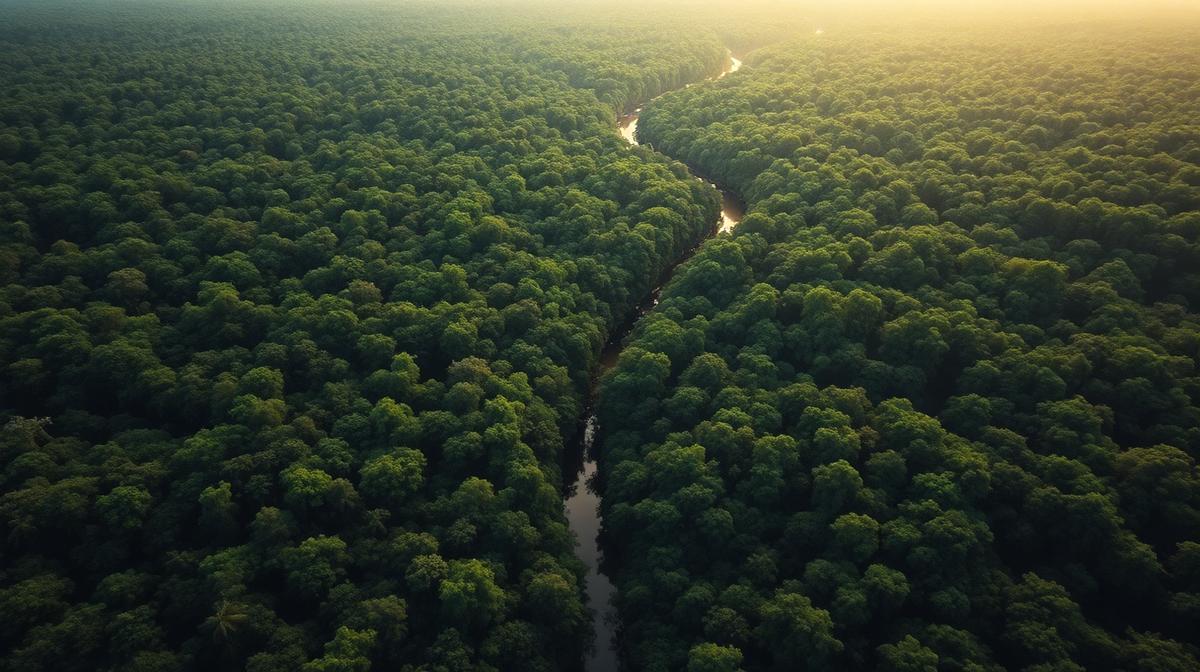
FAO’s Global Forest Resources Assessment 2020: Terms and Definitions, published in 2018, defines deforestation as the conversion of forest to another land use, regardless of whether that conversion is human-induced. Its explanatory notes also address long-term reductions in canopy cover below the threshold used to define forest.
The essential distinction is between removing trees and removing forest as a land category. A timber harvest changes the vegetation on a site. Deforestation changes whether that site continues to qualify as forest.
For example, clearing forest and establishing a crop field is deforestation. Harvesting a forest stand while retaining the land for forest regeneration is not automatically deforestation. Both activities may involve cutting trees, but they have different outcomes in forest-area accounting.
This is a classification distinction, not an endorsement of either activity. An operation can avoid being classified as deforestation while still damaging habitats, soils or the condition of the remaining forest.
Why can land without standing trees still count as forest?
FAO’s forest definition includes more than the trees visible at the moment of observation. It also accounts for land use and the capacity or expectation for trees to meet the forest definition.
In particular, temporarily unstocked areas can remain classified as forest when trees have been removed through harvesting or natural disturbance and regeneration is expected. Young stands that have not yet reached the relevant height and canopy thresholds can also qualify under the definition.
This explains an apparent contradiction: a recently harvested clearing may be reported as forest even though an aerial image shows little standing tree cover. The classification is describing the continuing land use and expected recovery, not claiming that mature trees are still present.
However, the expectation of regeneration matters. A bare site should not be treated as indefinitely exempt from scrutiny simply because it was once forest. To interpret a specific case, look for evidence about the subsequent land use, regeneration and the reporting rules applied.
The practical question is therefore not only, “Were trees removed?” It is also, “What happens to this land afterward?”
Logging, deforestation and degradation are different concepts
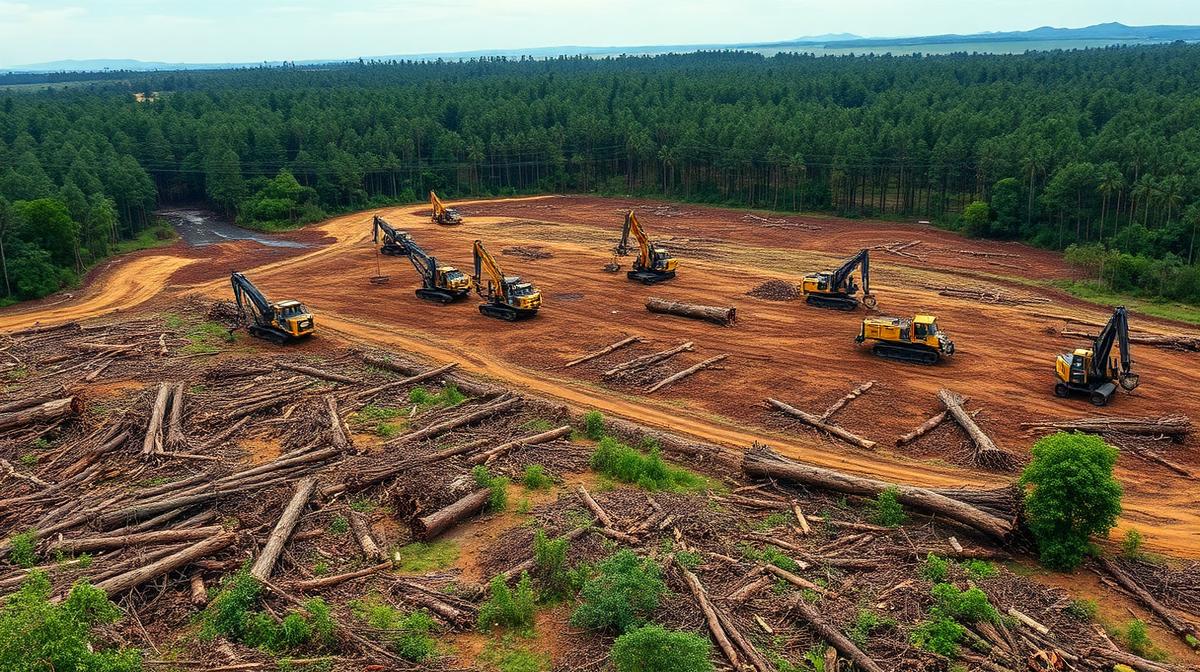
These terms describe related but distinct things:
- Logging describes the removal or harvesting of trees. By itself, the term does not establish whether the land will remain forest.
- Deforestation concerns the loss of forest through conversion to another land use or the relevant long-term change described in the reporting definition.
- Forest degradation concerns deterioration in forest condition. Land may remain classified as forest while losing important structural, productive or ecological characteristics.
Consider selective harvesting. Removing some trees may leave the site within the forest category. That does not establish that the operation had no environmental impact. The outcome depends on factors such as which trees were removed, how harvesting was carried out and how the remaining forest responds.
Conversely, deforestation does not require every tree to disappear. Forest converted to predominantly agricultural use may retain scattered trees but no longer qualify as forest under the land-use definition.
These categories are not substitutes for legal judgments either. Whether an activity is permitted under local law is a separate question from how a statistical reporting framework classifies the land afterward.
Is tree-cover loss the same as deforestation?
Not necessarily. Tree cover describes a physical feature: trees covering the ground. Forest land use describes a broader category that incorporates how land is used and whether temporarily absent trees are expected to return.
A tree-cover-loss observation can identify a substantial change in vegetation. On its own, however, it may not tell you whether that change resulted from timber harvesting, fire, another disturbance or permanent conversion to agriculture.
The reverse issue also matters. Trees occur outside forests, including in urban areas and agricultural landscapes. Their removal may be important locally without representing a reduction in forest area under FAO’s definition.
When reading a headline or dashboard, check what the underlying dataset measures:
- Trees removed or harvested;
- A change in tree canopy;
- Forest converted to another land use;
- A change in total forest area;
- A change in forest condition.
These measurements can complement one another, but they answer different questions. A canopy-change map needs additional interpretation before every loss location can be labelled deforestation. The same need to separate measures appears in water withdrawal vs. consumption: taking water from a source does not mean that all of it is consumed.
Does wildfire automatically cause deforestation?
No. FAO’s definitions allow areas temporarily without trees following natural disturbance to remain forest when regeneration is expected. A burned forest can therefore still be classified as forest land.
That does not mean a fire is environmentally insignificant. It means that a disturbance event and a lasting change in land use are not the same measurement.
The classification can differ if the affected land is subsequently converted to another use or experiences the relevant long-term loss of forest cover. Assessing that outcome requires information beyond the immediate burn scar.
This is another reason to be careful with short observation periods. An image taken just after a disturbance describes the condition at that moment. It cannot, by itself, establish the long-term trajectory of the land.
Why forest gains do not erase every forest loss
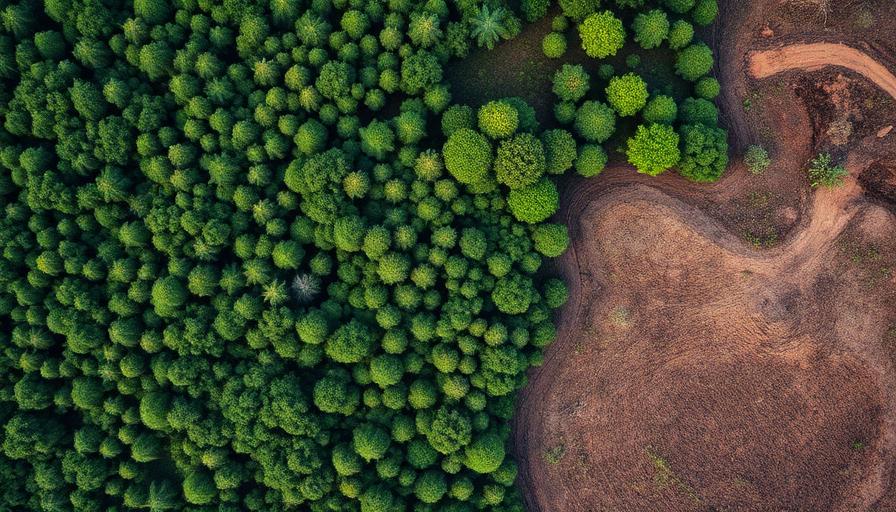
FAO’s Global Forest Resources Assessment 2025 (FRA 2025), published in October 2025, distinguishes deforestation from forest expansion and net forest-area change.
Net change balances gains against losses over a reporting period. It is useful for describing the direction of total forest area, but it does not reveal all the changes occurring within that total.
A country can gain forest in some places while losing it elsewhere. A stable overall area therefore does not prove that no deforestation occurred. Nor does it establish that the forests gained are equivalent in characteristics to those lost.
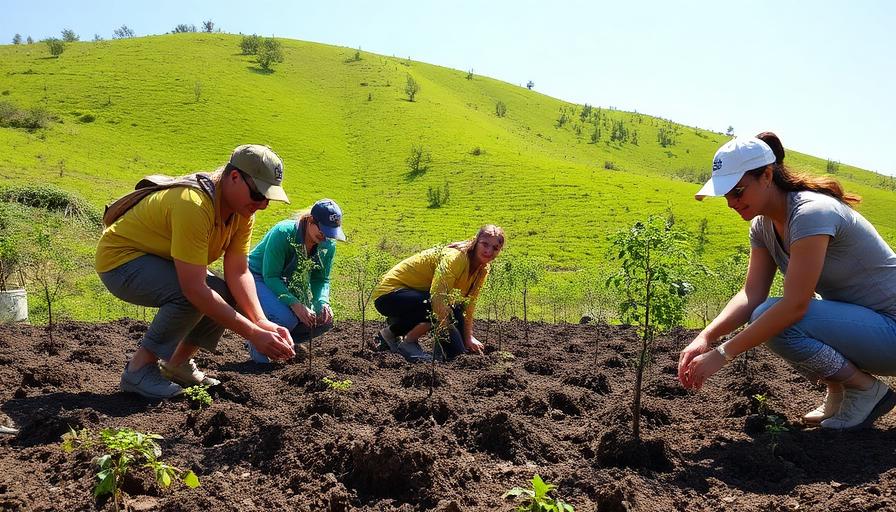
For the same reason, the tree-planting data availability page explains why no reliable comparable global planting counter is currently shown. Planting, where measured, is an activity count. It does not, by itself, establish survival, successful forest establishment or recovery of the characteristics of a removed forest.
Planting within an existing forest can support regeneration without expanding forest area. Establishing forest on land previously used for another purpose can contribute to forest expansion. The location and land-use outcome determine what the planting means for forest statistics.
Gross deforestation vs net forest loss: the numbers
FRA 2025 reports a world forest area of 4.14 billion hectares in 2025, about 32% of global land area. Its figures for the most recent decade show why the distinction matters:
| Measure (FRA 2025) | Average per year | Period |
|---|---|---|
| Deforestation (conversion of forest to other land use) | 10.9 million hectares | 2015–2025 |
| Forest expansion (new forest on non-forest land) | 6.78 million hectares | 2015–2025 |
| Net forest-area loss (losses minus gains) | 4.12 million hectares | 2015–2025 |
Calculated: 10.9 − 6.78 = 4.12 million hectares a year, so gross deforestation is more than two and a half times the net loss in the same period. Quoting only the net figure therefore understates how much existing forest is converted each year.
Historical comparison. FRA 2025 also shows that deforestation has slowed: 17.6 million hectares a year in 1990–2000 and 13.6 million hectares a year in 2000–2015. Net loss fell from 10.7 million hectares a year in 1990–2000 to 4.12 million in 2015–2025. The previous edition, FRA 2020, gave about 10 million hectares of deforestation a year for 2015–2020 and 4.7 million hectares of net loss for 2010–2020. Those older figures are kept here only for comparison; each FRA edition revises earlier years, so figures from different editions should not be mixed in one calculation.
What can a tree-cutting counter actually tell you?
A tree-cutting counter can help communicate the scale of the annual statistic behind it. Its usefulness depends on the source’s coverage, definitions, reference period and estimation method.
The SnapCounters tree counter uses a different unit from FAO: it spreads Crowther et al.'s estimate of about 15.3 billion trees lost each year (published in Nature in 2015) evenly over time. FAO's figures are hectares of forest land; Crowther's is a count of trees, including trees removed in forests that remain forest. The two cannot be converted into each other without assumptions about tree density, so the tree count should not be read as a deforestation figure.
A counter cannot independently tell you how much of the estimated cutting represents permanent forest conversion. Nor can a count of individual trees be converted into forest area without additional assumptions about tree density, tree size and the kinds of land involved.
Before using a counter in a presentation or article, check whether its source describes harvested trees, removals, forest-area loss or a model that estimates tree numbers from another quantity. Those are not interchangeable starting points.
SnapCounters counters distribute sourced annual statistics mathematically through time. Their changing digits do not indicate that a particular tree has just been detected falling. The explanation of how live world counters work provides the appropriate framework for reading these displays.
For broader context, the environment counters hub brings together related estimates. Environmental quantities should still be interpreted separately rather than combined as though they share a common unit or definition.
How to judge a claim about trees being cut down
Start with the question you actually need answered. If your concern is permanent forest conversion, look for a deforestation measure. If it is the condition of remaining forests, forest area alone will be insufficient.
Then check the source’s unit, geography, reporting period and definition. A statement about trees, a statement about canopy loss and a statement about hectares of forest are not directly equivalent. Also check whether an area figure represents gross loss or net change after gains are included.
Finally, keep classification separate from evaluation. “Not classified as deforestation” does not mean “no environmental damage,” just as “trees planted” does not prove successful ecosystem recovery.
This article uses FAO’s definitions published in 2018 and the FRA 2025 global figures, which describe averages up to 2025.
The most useful takeaway is simple: tree removal describes an event; deforestation describes an outcome for forest land. Understanding the connection requires knowing what happened to the land, not merely how many trees were cut.
Sources
- FAO, Global Forest Resources Assessment 2025 — Key findings (2025) and FAO press release (21 October 2025).
- FAO, Global Forest Resources Assessment 2020: Terms and Definitions (2018).
- FAO, Global Forest Resources Assessment 2020: Main report (2020), historical comparison only.
- Crowther et al., "Mapping tree density at a global scale", Nature (2015).