9.7 Billion Simultaneous Pulses
Right now, as your own heart contracts, 9.7 billion other hearts do the same across the planet. Not in unison — each on its own rhythm — but simultaneously. A sleeping newborn in Stockholm at 120 beats per minute. A marathon runner in Nairobi at 175 bpm. An elderly monk meditating in Kyoto at 55 bpm. Together, they form a biological orchestra that produces 9.7 billion beats every second without a conductor, without coordination, without rest.
Unlike digital metrics that could theoretically be paused, the collective heartbeat is the most unavoidable statistic on this site. Every living human contributes to it involuntarily. There is no opt-out, no downtime, no weekend. The count marches forward with the absolute reliability of biology.

The Math Behind the Heartbeat
The calculation is elegant in its simplicity. The global population (8.3 billion people) multiplied by the average resting heart rate (70 beats per minute) gives 581 billion beats per minute, which divided by 60 yields approximately 9.7 billion per second. This is a baseline estimate — actual instantaneous rates fluctuate as billions of people cycle between sleep, rest, and activity.
Heart rates vary enormously across demographics. Newborns average 120–160 bpm; children 80–100; adults 60–80; elite athletes as low as 40–50. Age distribution affects the global per-second total: as the population ages (median age has risen from 24 in 1990 to 31 in 2026), the average heart rate drifts slightly downward, partially offset by increasing population size.
The Energy of a Collective Pulse
Each heartbeat generates approximately 1–1.5 watts of mechanical power. At 9.7 billion beats per second, humanity's collective cardiac output produces roughly 12 gigawatts of power — comparable to the output of 12 nuclear power plants. This energy is entirely consumed by the work of pumping blood, delivering oxygen, and sustaining consciousness across 8.3 billion bodies.
Over the course of a day, the collective heartbeat produces enough energy to keep a large city's lights running. Over a year, it exceeds the total energy output of many small nations. The human heart is not just a pump — at species scale, it's one of the most powerful biological engines on the planet.
How the Collective Heartbeat Changes
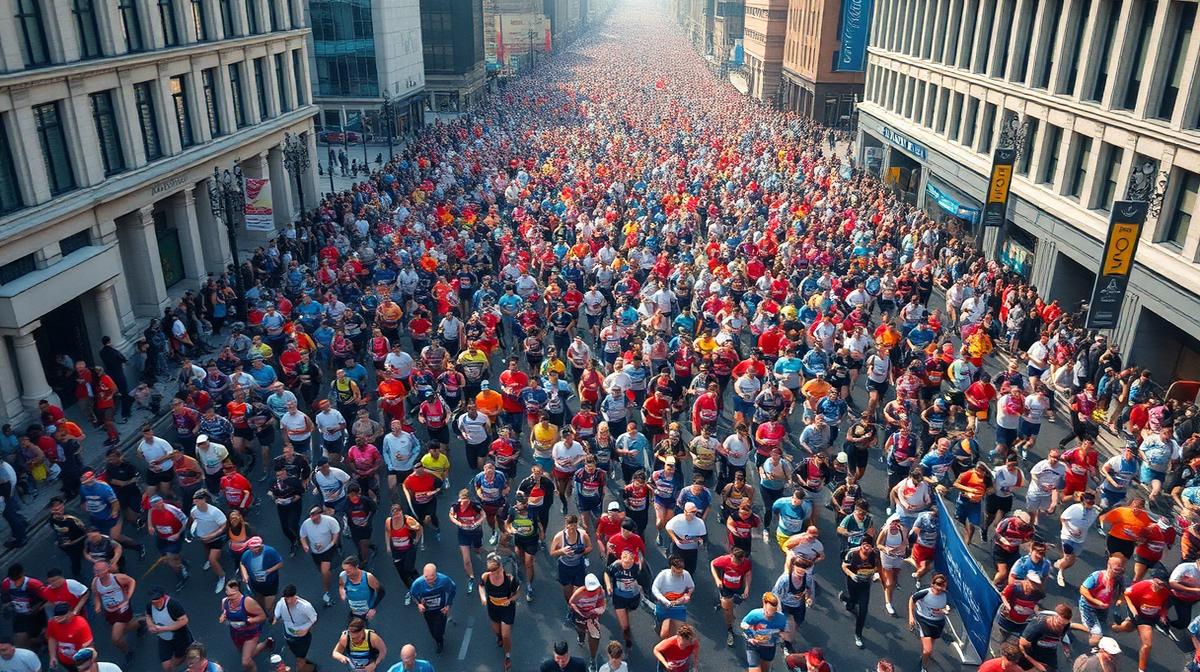
The 9.7 billion per second is an average, but the actual number fluctuates continuously. When China and India's combined 2.8 billion people are sleeping (lower heart rates), the global total dips. When European and American workforces are active and commuting, it rises. Major sporting events that raise the heart rates of hundreds of millions of viewers create measurable global spikes.
At the population level, each new birth (4.5 per second) adds a rapid little heart to the count, while each death (1.9 per second) removes one. The net effect of 2.6 additional hearts per second adds roughly 3 heartbeats per second to the global total — an imperceptible but real increase every moment.
A Lifetime in Heartbeats
The average human heart beats approximately 2.7 billion times over a 73-year lifespan. Multiplied by the current population of 8.3 billion, the collective remaining heartbeats of everyone alive today total roughly 22.4 quintillion — a number so vast it exceeds the estimated number of grains of sand on Earth by a factor of 3,000.
Every heartbeat performs the work of squeezing approximately 70 milliliters of blood through a 100,000-kilometer network of blood vessels. At the species level, 9.7 billion heartbeats per second move approximately 679 million liters of blood — enough to fill 270 Olympic swimming pools — every single second. The cardiovascular system is, without exaggeration, the most active machine in existence.
Beyond the Numbers
The collective heartbeat is perhaps the most humanizing metric we track. It's a reminder that behind every statistic — every email sent, every search query, every tonne of CO₂ — there's a living person whose heart is beating. See how the daily total accumulates in our heartbeats per day counter.
Explore more biological and health metrics on our health statistics dashboard, or see the complete picture of everything happening in the world right now — from digital pulses to biological ones.