
16,042 First Breaths Every Hour
In the time it takes to watch a TED talk, 5,300 new humans take their first breath. Every hour, 16,042 babies enter the world — in sterile hospital delivery rooms, in rural clinics lit by generator power, in homes with midwives, and occasionally in the back seats of cars racing to hospitals. Each represents a new consciousness, a new set of fingerprints, a new trajectory that will intersect with billions of others.
The hourly birth rate is particularly useful for understanding population momentum. While annual and daily figures feel abstract, 16,042 per hour is tangible — it's the population of a small town materializing every 60 minutes. By the time you've had an hour-long meeting, a new community's worth of humans has appeared, needing food, water, education, and opportunity.
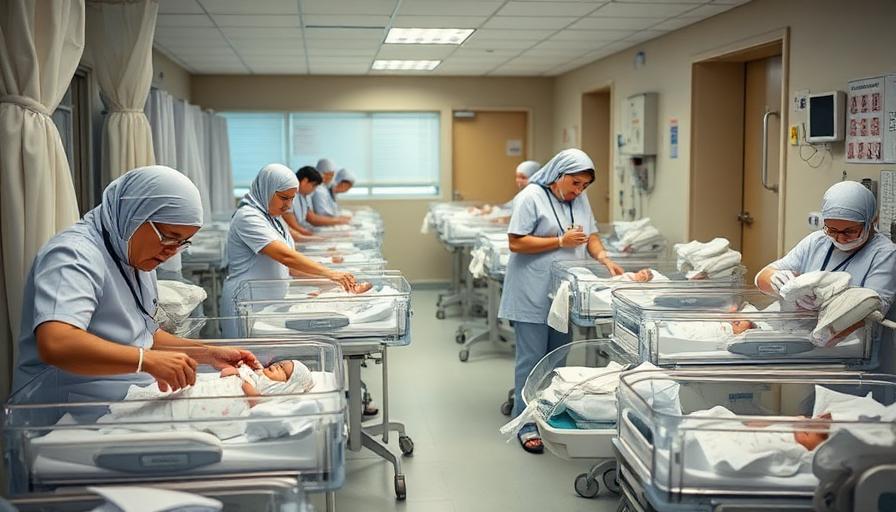
The Geography of Hourly Births
India alone accounts for roughly 3,000 of the 16,042 hourly births — nearly 19% of the global total. Sub-Saharan Africa as a region contributes approximately 4,800 births per hour, driven by Nigeria (1,200), Democratic Republic of Congo (500), Ethiopia (450), and Tanzania (350). These regions maintain fertility rates of 4–6 children per woman, roughly double the global average.
In contrast, Europe and East Asia contribute far fewer births per hour relative to their population. Japan produces roughly 100 births per hour — down from 200 in the 1990s. South Korea's hourly rate has dropped to just 30, reflecting the world's lowest fertility rate at 0.72 children per woman. The geographic redistribution of births is reshaping global demographics in real time.
Births Minus Deaths: The Hourly Balance Sheet
With roughly 6,950 deaths per hour, the net population increase is approximately 9,092 people every hour. That's a net gain of 218,000 per day, or roughly 80 million per year. At this rate, Earth adds the equivalent of Germany's population every 12 months. This net growth, while slowing from its 1960s peak, continues to compound pressures on food, water, energy, and housing systems.
The hourly net gain varies dramatically by region. Sub-Saharan Africa gains roughly 3,900 net new people per hour. South Asia adds 2,800. Meanwhile, Europe has become a net-negative region, losing approximately 150 people per hour as deaths exceed births. East Asia is approaching the same tipping point, with China's population having begun declining in 2023.
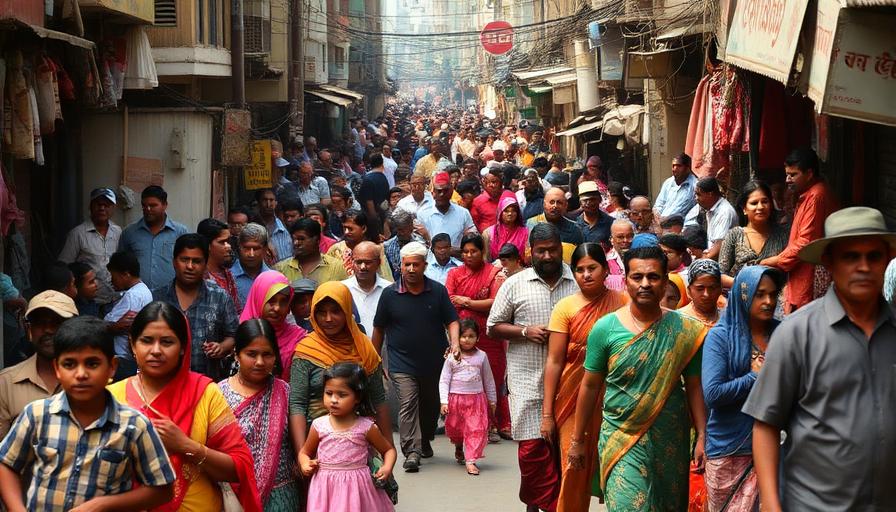
What Each Hourly Cohort Needs
Every cohort of 16,042 newborns triggers immediate resource demands. They will collectively require approximately 8,000 liters of breast milk or formula per day. Within a year, they'll need 16,042 pediatric checkups, roughly 5 million diapers over their infant years, and eventually 16,042 school places, teachers, and sets of textbooks. The infrastructure pipeline must prepare years in advance for humans that don't yet exist.
Health-wise, the hourly cohort includes statistical certainties. Roughly 640 (4%) will be born prematurely. Approximately 50 will die within their first day — though this number has halved since 2000. Around 3 will be born with Down syndrome, 5 with congenital heart defects, and 16 with some form of cleft lip or palate. Modern medicine saves the vast majority who would have perished a generation ago.
The Slowing Pulse of Fertility
The hourly birth rate has actually declined from its peak of ~18,000 in the late 1980s. Global fertility has dropped from 5.0 children per woman in 1960 to 2.3 in 2026. At replacement level (2.1), population stabilizes; below it, population eventually declines. Over half the world's countries now have below-replacement fertility, including China, Brazil, Iran, and most of Europe.
Demographers project the hourly birth rate will decline to approximately 14,000 by 2040 and 12,000 by 2060. Global population is expected to peak at roughly 10.3 billion around 2080 and then begin a slow, sustained decline. The era of explosive population growth — which began around 1800 — appears to be entering its final decades.

Related Population Data
Hourly births connect to the broader dynamics of global population:
- 4.5 births per second — the per-second pace behind the hourly total
- 385,000 births per day — the daily accumulation
- 61 million deaths per year — births exceed deaths 2.3:1
- What happens every second? — the full picture of global real-time activity