
The Invisible River of Money
Every second, over 20,000 card transactions are authorized somewhere in the world. A tap at a London coffee shop, a swipe at a Tokyo convenience store, an online checkout in São Paulo — each triggers a chain of encrypted messages that traverse continents in milliseconds. The 1.8 billion daily transactions represent the backbone of the modern economy: the invisible infrastructure that enables commerce to flow without physical cash changing hands.
This volume has more than doubled since 2018, driven by the rapid decline of cash usage, the explosion of ecommerce, and the global adoption of contactless payment technology. In countries like Sweden and Norway, cash now accounts for less than 5% of all transactions. Even in historically cash-heavy economies like Germany and Japan, card usage has surged post-pandemic.

The Payment Networks Behind Every Tap
Four major networks dominate global card payments. Visa leads in Western markets with approximately 720 million transactions per day. Mastercard follows with roughly 350 million daily transactions. China's UnionPay processes an estimated 500 million transactions per day — the largest by some measures, driven by China's massive domestic market. American Express, JCB, Discover, and others account for the remaining volume.
Each transaction involves at least five parties: the cardholder, the merchant, the acquiring bank (merchant's bank), the card network, and the issuing bank (cardholder's bank). The entire authorization process — from tap to approval beep — takes 1–3 seconds, during which encrypted data may travel thousands of kilometers through fiber optic cables and processing centers.

Fraud, Security, and the $30 Billion Battle
With 1.8 billion daily transactions, payment fraud is an enormous challenge. Global card fraud losses exceeded $30 billion in 2025, with card-not-present (online) fraud accounting for approximately 73% of losses. Payment networks deploy sophisticated AI systems that analyze hundreds of data points per transaction — location, spending patterns, device fingerprints, merchant category — to flag suspicious activity in real time.
Despite the scale of fraud, the overall fraud rate remains remarkably low: approximately 5–7 cents per $100 transacted, or roughly 0.06%. The deployment of EMV chip technology has virtually eliminated counterfeit card fraud at physical terminals, pushing criminals toward online channels where tokenization and 3D Secure protocols continue to improve defenses.
The Decline of Cash
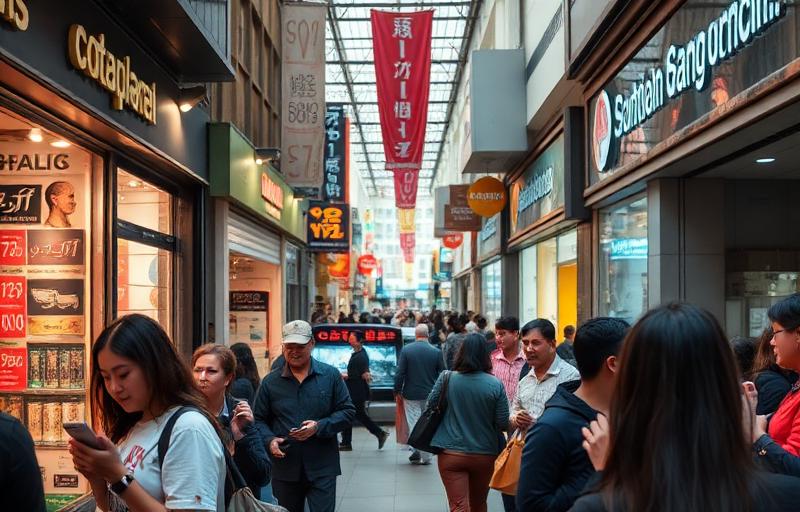
The 1.8 billion daily card transactions reflect a fundamental shift away from physical currency. In the United States, cash transactions dropped below 16% of all payments in 2025 — down from 31% in 2016. The UK has seen an even sharper decline, with cash representing just 12% of payments. Mobile wallets (Apple Pay, Google Pay, Samsung Pay) have accelerated this trend by making card payments even more frictionless than tapping a physical card.
This cashless trajectory raises important questions about financial inclusion. An estimated 1.4 billion adults worldwide remain unbanked — without access to formal financial services. For these populations, the digital payment revolution hasn't arrived. Organizations like the World Bank and fintech companies in Africa and South Asia are working to bridge this gap through mobile money systems that operate outside traditional banking infrastructure.
1.8 Billion Transactions in Perspective
If each of today's 1.8 billion card transactions were printed on a standard receipt (20 cm long), the paper would stretch 360,000 kilometers — nearly the distance from Earth to the Moon. The combined data from a single day's transactions, if stored as plain text, would fill approximately 180 terabytes — equivalent to the entire printed collection of the Library of Congress repeated 36 times. This river of financial data never stops flowing, making payment networks the most continuously active infrastructure humanity has ever built.