
Quick facts
- ▸~620,000 on-chain Bitcoin transactions per day in 2026 — about 7.2 per second.
- ▸Lightning Network adds an estimated 500,000+ off-chain transactions daily.
- ▸Average fee: $1–5 normally, spiking to $20–50 during peak demand.
- ▸Network throughput is capped at ~7 TPS by 10-minute blocks and 1 MB block size.
- ▸Bitcoin mining consumes ~150 TWh/year — roughly Poland's annual electricity use.
While you've been on this page…
Live, since you opened this page — at typical network rates.
+5
Bitcoin on-chain txs · ~7.2 / sec
+6,784
Credit card txs · ~8.3K / sec
+15
Amazon orders · ~18.5 / sec
Bitcoin transaction volume in perspective
Bitcoin / day
~620K
On-chain only
Credit cards / day
~720M
Global cards
Card networks process more than 1,000× as many daily transactions as Bitcoin base layer.
Bitcoin TPS
~7
Base layer
Lightning
Instant
Layer 2 payments
Bitcoin prioritizes settlement security; high-speed payments increasingly move to layer 2.
Daily tx count
~620K
Relatively small
Value moved
$10B+
Often daily
Bitcoin behaves more like a settlement network than a retail payment rail.
The Blockchain That Never Sleeps
Every 10 minutes, a new block is added to the Bitcoin blockchain — a permanent, immutable record of approximately 2,500–4,000 transactions. Since Satoshi Nakamoto mined the genesis block on January 3, 2009, the Bitcoin network has processed over 1 billion total transactions without a single minute of downtime. In 2026, the network handles approximately 620,000 on-chain transactions per day, representing billions of dollars in daily value transfer.
Unlike traditional financial systems that operate during business hours and close on weekends, Bitcoin runs 24/7/365. There are no holidays, no maintenance windows, and no central authority that can halt operations. This continuous availability makes Bitcoin unique among global financial networks and explains its appeal for international remittances and time-zone-independent commerce.
On-Chain vs. Off-Chain: The Full Picture
The 620,000 daily on-chain transactions represent only the base layer of Bitcoin activity. The Lightning Network — a "layer 2" payment channel system built on top of Bitcoin — enables near-instant, low-cost transactions that don't require individual blockchain confirmations. In 2026, the Lightning Network processes an estimated 500,000+ additional daily transactions, primarily small-value payments and micropayments.
Exchange-internal transactions add another layer of invisible activity. When users trade Bitcoin on platforms like Coinbase, Binance, or Kraken, many trades are settled internally without touching the blockchain at all. Chainalysis estimates that exchange-internal transfers account for 5–10x the volume of on-chain transactions, suggesting total daily Bitcoin-related transactions may exceed 5 million.
Bitcoin daily on-chain transactions — historical trend
| Year | Avg. transactions per day |
|---|---|
| 2013 | ~60,000 |
| 2017 | ~330,000 |
| 2020 | ~310,000 |
| 2023 | ~430,000 |
| 2026 | ~620,000 |
Sources: Blockchain.com, Glassnode, CoinMetrics. Figures are annual averages.
Who Is Transacting and Why?
Bitcoin transactions serve diverse purposes. Institutional investors and hedge funds use Bitcoin as a treasury asset and inflation hedge — large-value transfers ($100,000+) account for a small number of daily transactions but represent the majority of value moved. Exchange arbitrageurs exploit price differences across platforms. Miners sell block rewards to cover electricity costs. And a growing number of merchants accept Bitcoin for goods and services, particularly in El Salvador, where Bitcoin is legal tender.
International remittances represent one of Bitcoin's most practical use cases. Workers sending money from the US to Latin America, from the Gulf states to South Asia, or from Europe to Africa use Bitcoin to avoid traditional wire transfer fees of 5–10%. Chainalysis reports that sub-$10,000 transfers — likely remittances — account for approximately 45% of all on-chain transactions by count.

The Energy Debate
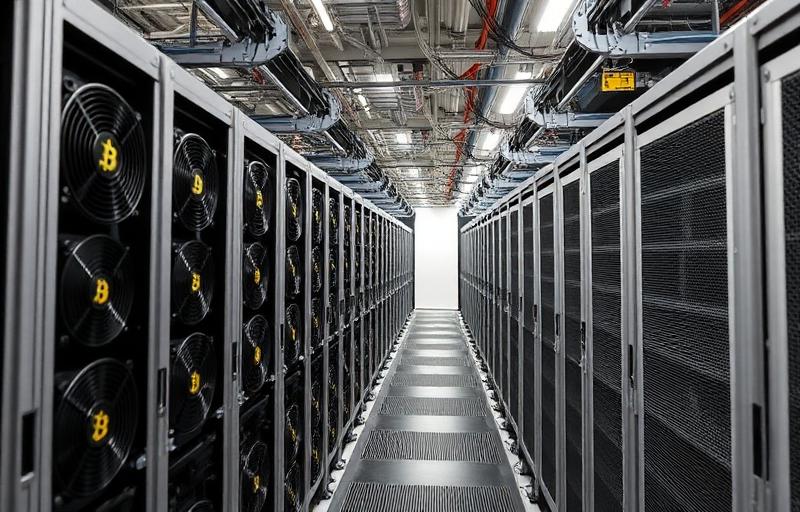
Bitcoin mining consumes approximately 150 TWh of electricity annually in 2026 — roughly equivalent to the entire energy consumption of Poland. The per-transaction energy cost is a subject of intense debate: critics calculate that each transaction uses 700–1,400 kWh, while proponents argue that mining energy secures the entire network and should not be divided by transaction count.
The mining industry has increasingly adopted renewable energy sources. The Bitcoin Mining Council reports that approximately 60% of global Bitcoin mining uses sustainable energy — primarily hydroelectric power in Scandinavia and North America, and stranded natural gas in Texas. Some operations are pioneering "demand response" programs, where miners consume excess grid energy during off-peak hours and curtail operations during peak demand, effectively stabilizing electrical grids.

620,000 Transactions in Context
Bitcoin's 620,000 daily transactions are a fraction of Visa's 720 million — roughly 0.09%. Yet the total value transferred on-chain often exceeds $10 billion per day, rivaling Visa's daily value in some periods. This disparity highlights Bitcoin's role not as a retail payment system but as a settlement network for high-value transfers — more comparable to Fedwire (the US Federal Reserve's interbank settlement system, which handles about 800,000 daily transactions worth $4 trillion) than to consumer credit cards.
Data & transparency
- Source
- Blockchain.com, Glassnode, CoinMetrics, Cambridge Bitcoin Electricity Consumption Index
- Update frequency
- Annual baseline; live counter updates every second
- Calculation
- Estimated 620,000 daily on-chain transactions ÷ 86,400 seconds per day
- Last updated
Sources & further reading
- Blockchain.com — Bitcoin Network Charts— Blockchain.com
- Glassnode — On-Chain Bitcoin Analytics— Glassnode
- CoinMetrics — Network Data Pro— CoinMetrics
- Cambridge Bitcoin Electricity Consumption Index— University of Cambridge
- Chainalysis — Crypto Crime & Activity Reports— Chainalysis