
Feeding 8.1 Billion People
Every second, humanity consumes approximately 203 million calories. Breakfast tables are set in Tokyo while dinner plates are cleared in London. Street vendors in Lagos grill suya while lunch trucks roll through San Francisco. The 17.6 trillion daily calories that fuel the human species represent the output of 570 million farms, 500 million hectares of cropland, and a food supply chain that is arguably the most complex logistical system ever created.
To put this number in physical terms: 17.6 trillion calories is equivalent to approximately 8.8 billion kilograms of food consumed daily — roughly 1.1 kg per person. This food arrives through an intricate web of agriculture, processing, transportation, retail, and preparation that spans every continent and crosses every ocean.

Where the Calories Come From
Three grain crops dominate human nutrition. Rice provides approximately 20% of global calories, feeding over 3.5 billion people as a dietary staple — primarily across Asia and Sub-Saharan Africa. Wheat supplies 19%, forming the basis of bread, pasta, and noodles across Europe, the Americas, and Central Asia. Corn (maize) contributes 5% directly as food, though a much larger share enters the human diet indirectly through animal feed and corn-derived sweeteners.
Sugar and sweeteners account for roughly 8% of global calories — a figure that has risen steadily over decades and is closely linked to the global obesity epidemic. Vegetable oils (palm, soybean, sunflower) provide another 7–8%. Animal products — meat, dairy, eggs, fish — contribute approximately 18% of calories but require disproportionate resources: roughly 77% of agricultural land is used for livestock and feed crops, yet animal products supply less than one-fifth of global calories.
The Inequality of Nutrition
The global average of 2,170 calories per person per day masks enormous disparities. Americans consume an average of 3,800 kcal per day — nearly double the global average and well above the 2,000–2,500 kcal recommended for most adults. Europeans average roughly 3,400 kcal. At the other extreme, many countries in Sub-Saharan Africa and South Asia see average intakes below 2,000 kcal, with the Central African Republic among the lowest at approximately 1,600 kcal per person per day.
This disparity produces a paradox: approximately 735 million people worldwide are chronically undernourished, while 2.1 billion adults are overweight or obese. Malnutrition and overconsumption coexist not just between countries but within them — urban centers in India and Nigeria see rising obesity rates even as rural populations face food insecurity. The global food system produces enough calories to feed 10 billion people, yet distribution failures, poverty, and waste leave hundreds of millions hungry.

The Environmental Cost of 17.6 Trillion Calories
The global food system is responsible for approximately 26% of all greenhouse gas emissions — more than the entire transportation sector. Agriculture uses 70% of global freshwater withdrawals and is the leading driver of deforestation, biodiversity loss, and soil degradation. Producing one calorie of beef requires roughly 25 calories of feed input, while plant-based foods are far more resource-efficient — one calorie of wheat requires only 2.5 calories of total input.
As the world population approaches 9 billion by 2037, food production must increase by an estimated 35–50% to meet demand. Climate change simultaneously threatens crop yields through droughts, floods, and shifting growing seasons. Agricultural innovation — precision farming, drought-resistant crops, vertical farming, and alternative proteins — will be critical to sustainably feeding a growing world without accelerating environmental degradation.
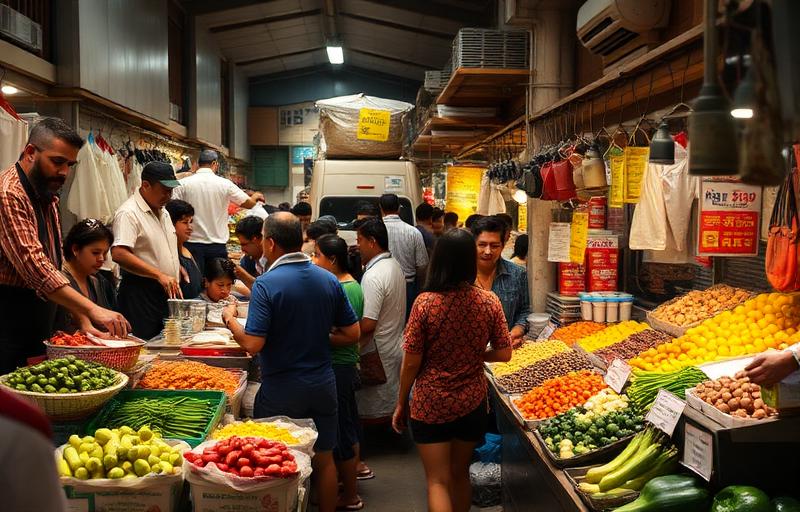
17.6 Trillion Calories in Perspective
If humanity's daily caloric intake were converted to its energy equivalent, 17.6 trillion kilocalories equals approximately 73.6 terajoules — enough energy to power 20,000 homes for a year. Expressed as a single food: today's calories are equivalent to approximately 35 billion bananas, 22 billion slices of bread, or 8.8 billion Big Macs. The sheer scale of daily human food consumption is a testament to the agricultural revolution that transformed our species from scattered hunter-gatherers to a civilization capable of feeding billions — however unevenly that food is distributed.
Related: Food wasted per day · Water used per day · Births per day