
142 Million New Humans Each Year
Every year, roughly 142 million newborns take their first breath — enough to fill Germany from border to border with infants. If you lined up every baby born in a single year, the line would circle the Earth more than seven times. This is not a projection or an estimate based on guesswork; it's derived from vital registration data, demographic surveys, and hospital records spanning virtually every nation on Earth.
What makes the annual figure especially powerful is its predictability. Despite wars, pandemics, famines, and economic crises, yearly births have remained within a remarkably tight band of 130–145 million for the past three decades. The biological machinery of human reproduction operates with almost industrial consistency at the population level.

Where the World's Babies Are Born
The geographic concentration of annual births has shifted dramatically. In 1960, Asia accounted for 57% of global births. Today, while Asia still leads with about 55%, Africa's share has surged from 13% to 29%. By 2050, more than 40% of the world's babies will be born in Africa — a demographic transformation with enormous implications for global economics, migration patterns, and resource demands.
India alone accounts for 17% of annual global births — about 24.5 million per year. Nigeria contributes 5.1%, and its birth count is rising even as most other nations see declines. At current trajectories, Nigeria's annual births will surpass India's by 2070, making it the demographic engine of the late 21st century.
The Fertility Decline That Shapes Everything
Despite 142 million annual births, the total fertility rate has plummeted from 5.0 children per woman in 1960 to 2.3 in 2026. This means each generation of women is having fewer children than the last — but because there are so many women of childbearing age (1.9 billion globally), the absolute number of births remains high even as the rate declines.
This is demographic momentum: a population continues growing even after fertility drops below replacement level (2.1 children per woman) because the large cohort of young adults born during higher-fertility decades is still reproducing. It's why global births won't decline sharply for decades, even though most countries now have fertility rates below replacement.
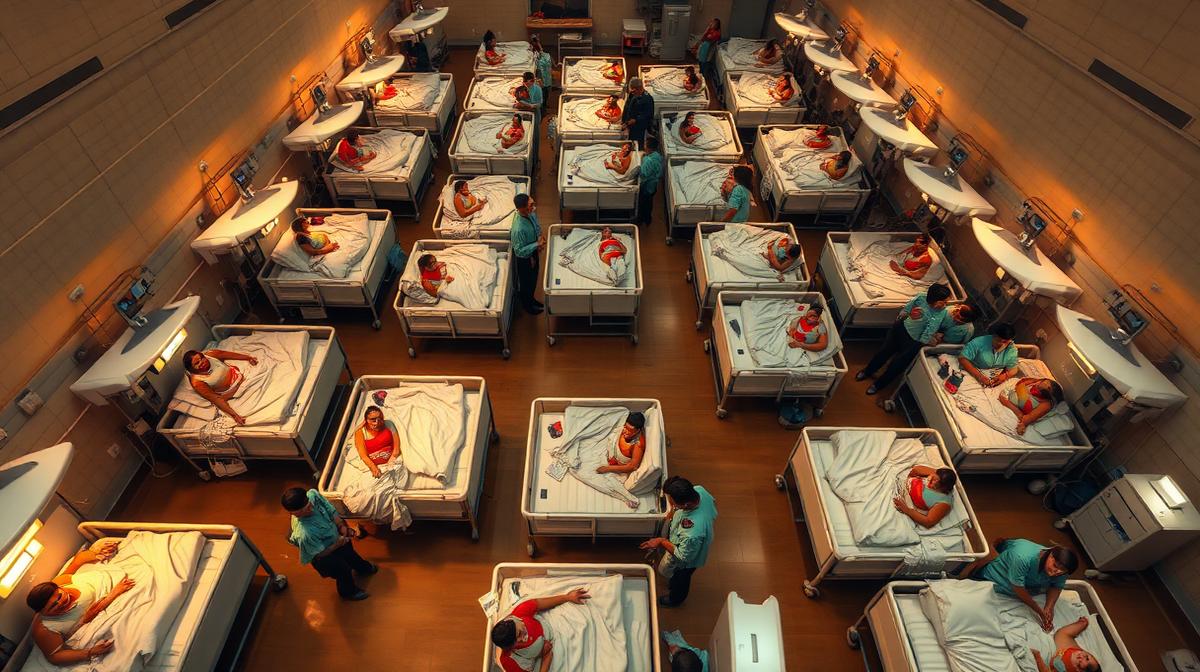
Annual Births vs. Annual Deaths
The gap between annual births (142 million) and annual deaths (60 million) yields a net annual increase of approximately 82 million people. That's the equivalent of adding the entire population of Turkey to the planet every year. This growth rate, while slowing, ensures the world population continues climbing toward an estimated 9.7 billion by 2050.
The UN projects annual births will decline to about 126 million by 2050, while annual deaths will rise to roughly 90 million. The convergence point — where births and deaths are equal — is estimated to occur sometime between 2080 and 2100, depending on healthcare advances and fertility trends.
The Resource Footprint of 142 Million Births
Each of those 142 million annual births initiates a lifetime of resource consumption. Over an average 73-year lifespan, a single person born today will consume approximately 25,000 kilograms of meat, drink 1.9 million liters of water, and generate 700 metric tons of CO₂. Multiply those figures by 142 million, and the annual birth cohort's lifetime environmental footprint becomes genuinely planetary in scale.
Education systems must absorb 142 million new students roughly 5–6 years later. Healthcare systems will serve them for 73+ years. Labor markets will need to create opportunities for them 16–22 years later. Each annual cohort creates cascading demand waves that ripple through economies for nearly a century. Learn how this connects to daily CO₂ emissions.

Explore Birth Data at Every Scale
The annual view reveals long-term demographic trajectories, but the same data tells different stories at different magnifications. Zoom into 4.5 births per second for the raw velocity of human arrival, or view 389,000 births per day for a more graspable daily rhythm.
Birth statistics sit at the core of world population tracking and connect to virtually every other metric we monitor — from global heartbeats to resource consumption. See what happens every second in the world for the complete picture.