
The Digital Frontier Expands Every Second
Seven times per second, somewhere on Earth, a person connects to the internet for the very first time. A farmer in rural Bihar accesses crop prices on a smartphone. A teenager in Lagos opens a web browser for the first time at a community center. A grandparent in Indonesia receives their first WhatsApp message. Each of those 640,000 daily first-time users represents a life permanently altered by access to the world's information.
The scale of what's happening is historically unprecedented. Electricity took 60 years to reach 50% of the world's population. Television took 40 years. The internet has gone from reaching 1% of humanity in 1995 to 68% in 2026 — a 30-year transformation that rivals the printing press in its civilizational impact, but at a pace orders of magnitude faster.

How New Internet Users Are Counted
The International Telecommunication Union (ITU) — the UN's technology agency — provides the gold-standard estimates. They combine mobile network operator data on new SIM activations with device data, household surveys, and national census data. GSMA Intelligence tracks mobile internet adoption specifically, while firms like DataReportal and We Are Social aggregate public and proprietary data to produce widely-cited annual digital reports.
Defining "internet user" is nuanced. The ITU definition requires having used the internet at least once in the past three months. A single Google search or WhatsApp message qualifies. By this measure, the 640,000 daily new users represents genuine first-time connectivity — people who were entirely offline and are now participating in the digital world.
Where Are the 640,000 Daily New Users?
India contributes the largest single share — roughly 120,000 new users per day — driven by affordable data plans (as low as $2/month) and sub-$100 smartphones. Sub-Saharan Africa adds approximately 100,000 daily, led by Nigeria, Ethiopia, and the Democratic Republic of Congo. Indonesia, Bangladesh, and Pakistan each contribute 30,000–50,000 daily new users.
The profile of new internet users has shifted dramatically. The "low-hanging fruit" — urban, young, educated populations — is largely connected. Today's new users tend to be older, rural, less educated, and lower-income. They overwhelmingly access the internet through basic smartphones rather than computers, and their primary activities are messaging (WhatsApp, Facebook Messenger), social media, and mobile banking.
The Digital Divide: 2.6 Billion Still Offline
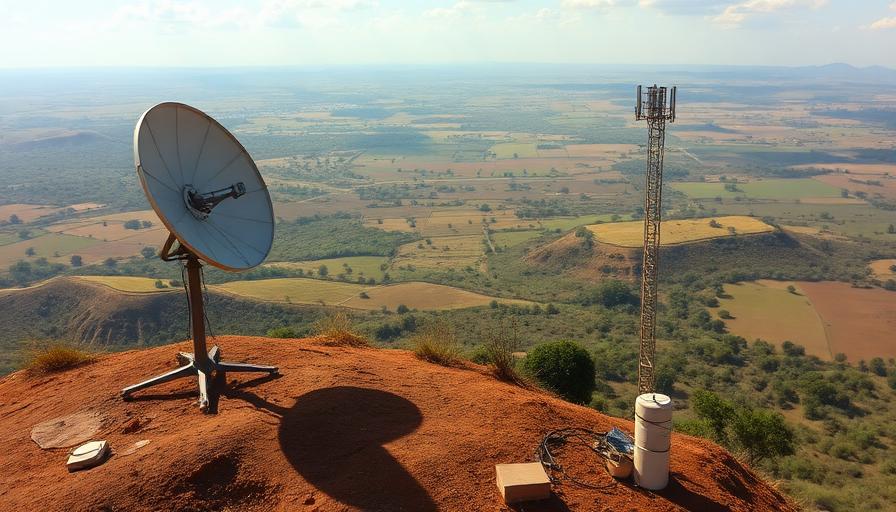
Despite 640,000 new users daily, 2.6 billion people remain offline — roughly one-third of humanity. The barriers are multifaceted: infrastructure (no cell towers or fiber in remote areas), affordability (data plans exceeding 5% of monthly income), digital literacy (inability to navigate basic interfaces), and relevance (lack of content in local languages).
Gender compounds the divide. Globally, women are 16% less likely to use the internet than men, and in South Asia and sub-Saharan Africa, the gap exceeds 30%. Cultural barriers, lower phone ownership rates, and restricted mobility all contribute. Closing this gender digital divide could add $524 billion to global GDP over the next decade, according to GSMA estimates.
Growth Trajectory: The Final Billion
Internet adoption follows an S-curve. The fastest growth occurred between 2015 and 2022, when 1.5 billion people came online. Growth is now decelerating — not because demand is waning, but because the remaining unconnected populations face the most stubborn barriers. Reaching the next billion will require satellite internet (Starlink, Project Kuiper), community networks, and radical affordability breakthroughs.
Projections suggest reaching 6 billion internet users by 2030 and approximately 7 billion by 2040. Universal internet access — connecting the final 10–15% of humanity in the most remote and impoverished regions — may not be achievable until 2045 or later, barring transformative technology breakthroughs in satellite or mesh networking.
Related Data Points
New internet users drive growth across every digital metric:
- 5.5 billion internet users now — the current total connected population
- 9.1 billion Google searches per day — more users means more queries
- 100 billion WhatsApp messages per day — messaging is often the first online activity
- What happens every second? — the full picture of global real-time activity