Quick facts
- ▸23 billion SMS sent every day worldwide in 2026 — roughly 266,000 per second.
- ▸About 70% of daily SMS volume is now Application-to-Person (2FA codes, notifications, marketing).
- ▸The United States alone sends around 2 billion SMS per day.
- ▸Average SMS length: ~7 words (35 characters) — far below the 160-character limit.
- ▸Global SMS traffic uses just ~3.7 TB of data per day — less than a few minutes of Netflix streaming.
While you've been on this page…
Live, since you opened the page — at typical worldwide rates.
+215,997
SMS messages · ~266K / sec
+941,223
WhatsApp messages · ~1.16M / sec
+2,839,899
Emails sent · ~3.5M / sec
SMS in perspective
SMS / day
~23B
Telco SMS only
WhatsApp / day
~100B
Single platform
WhatsApp handles ~4× the daily volume of all SMS combined.
SMS / day
~23B
Person + business
Emails / day
~300B
All providers
13 emails are sent for every SMS — and emails still dominate business comms.
SMS / smartphone
~3.2 / day
~7.2B smartphones
A2P share
~70%
2FA, alerts, marketing
Most SMS today is not from people — it's from systems talking to people.
A short history of SMS
- 1992First SMS
"Merry Christmas" sent over Vodafone's GSM network.
- 2007~1.8B / day
SMS becomes the default mobile communication channel.
- 2010~17B / day
Peak era of person-to-person texting.
- 2015~22B / day
WhatsApp overtakes SMS in raw message volume.
- 2026~23B / day
A2P (business) traffic keeps SMS growing despite app shift.
Did you know?
Every second…
~266,000 SMS are delivered — roughly the population of Reno, Nevada.
Tiny by design
Each SMS is capped at 160 characters — the limit a Nokia engineer chose because postcards fit roughly that much.
Equivalent to…
A full day of global SMS traffic is just ~3.7 TB — less than 30 minutes of global Netflix streaming.
Bots talk too
~70% of all SMS today are sent by software: 2FA codes, delivery alerts, appointment reminders.
The Protocol That Refuses to Die
SMS — the Short Message Service — was invented in 1992, making it one of the oldest digital communication technologies still in widespread use. Despite the rise of WhatsApp, iMessage, Telegram, and countless other messaging apps, the humble text message continues to thrive at 23 billion messages per day. Why? Because SMS works on every mobile phone ever made, requires no internet connection, and reaches anyone with a phone number — no app download or account creation needed.
The composition of SMS traffic has shifted dramatically. Person-to-person texting now accounts for only about 30% of daily SMS volume. The remaining 70% consists of Application-to-Person (A2P) messages: two-factor authentication codes, delivery notifications, appointment reminders, marketing campaigns, and emergency alerts. This business-driven SMS traffic has actually grown year-over-year even as personal texting migrates to internet-based platforms.
Global SMS volume — historical trend
| Year | SMS sent per day (worldwide) |
|---|---|
| 2010 | ~17 billion |
| 2015 | ~22 billion |
| 2020 | ~20 billion |
| 2023 | ~21 billion |
| 2026 | ~23 billion |
Sources: GSMA Intelligence, Statista, ITU. Figures rounded to nearest billion.
SMS vs. Messaging Apps: The Numbers
While 23 billion SMS per day sounds enormous, it's dwarfed by internet-based messaging. WhatsApp alone handles over 100 billion messages daily. WeChat processes 45 billion. iMessage, Telegram, Facebook Messenger, and others add tens of billions more. The total daily messaging volume across all platforms exceeds 200 billion messages — a number so large that it means every person on Earth, statistically, sends 25 messages per day.
Yet SMS retains crucial advantages. It's the only messaging channel with true universal reach — no internet required, no app required, compatible across all carriers and devices. This universality makes it the default channel for high-priority communications: emergency government alerts, bank transaction notifications, password reset codes, and medical appointment reminders all rely on SMS precisely because it reaches everyone.
The A2P SMS Boom
Application-to-Person messaging — automated texts sent by businesses and services — has become a massive industry worth over $70 billion annually. Every time you receive a verification code from Google, a shipping notification from FedEx, or a promotional text from a retailer, that's an A2P SMS. This category generates approximately 16 billion of the daily 23 billion SMS messages.
The A2P market continues to grow at 4–6% annually, driven by the expansion of two-factor authentication and the shift toward conversational commerce. RCS (Rich Communication Services), an enhanced SMS protocol supported by Google and major carriers, aims to bring app-like features — images, buttons, payment integration — to the default messaging experience, potentially accelerating A2P SMS growth further.
The Infrastructure of 160 Characters
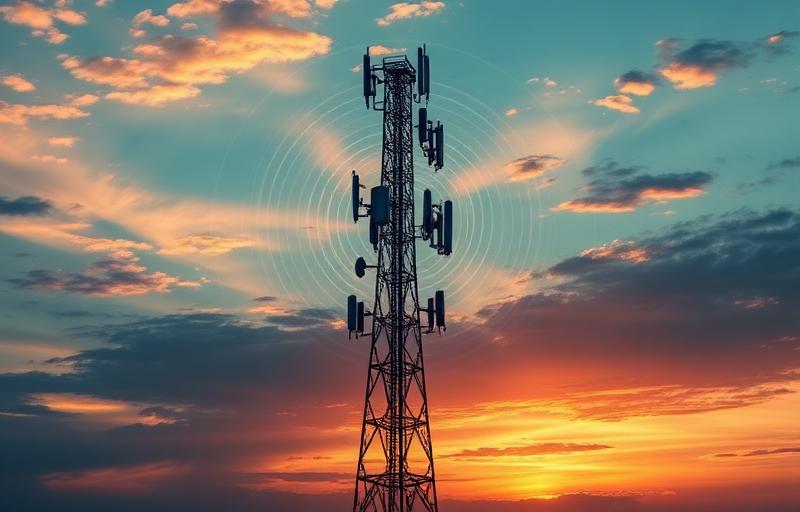
SMS messages travel through cellular control channels — the same signaling pathways used to set up voice calls. This piggyback design was what made SMS essentially "free" for carriers to implement in the 1990s, since it used bandwidth that was already allocated but mostly idle. Each SMS is limited to 160 characters (or 70 for non-Latin scripts like Chinese or Arabic), a constraint that spawned text-speak abbreviations and ultimately influenced how billions of people communicate.
At 23 billion messages per day, the total data volume of global SMS traffic is surprisingly small — approximately 3.7 terabytes per day if each message averages 160 bytes. By comparison, a single Netflix stream in 4K consumes about 7 GB per hour. The entire world's daily SMS volume could fit on a single modern hard drive.
23 Billion Messages in Context
If every SMS sent today were printed on a slip of paper (5 cm tall), the stack would reach 1.15 million kilometers — three times the distance to the Moon. If read aloud at a pace of one message per second, it would take over 730 years to read a single day's worth of texts. The combined character count — roughly 3.7 trillion characters — is equivalent to about 2.5 million novels, or roughly 10 times the total number of books ever published in human history.
Text Messages — Per Second, Per Minute, Per Hour, Per Day and Per Year
The same statistic is often googled in five different units of time. Here are the exact numbers for text messages at every scale — from a single second up to a full calendar year.
How many text messages per second? ~266,000
Approximately ~266,000 text messages happen every second worldwide in 2026. That's the pace ticking on the live counter above — every heartbeat, another wave.
How many text messages per minute? ~16 million
About ~16 million text messages occur every minute globally. Blink twice while reading this sentence and hundreds of thousands more have already happened.
How many text messages per hour? ~958 million
Roughly ~958 million text messages take place every hour around the world — a firehose that never slows for weekends, holidays, or nightfall.
How many text messages per day? ~23 billion
Around ~23 billion text messages happen every day worldwide in 2026 — the headline number most people are searching for when they ask about text messages.
How many text messages per year? ~8.4 trillion
Roughly ~8.4 trillion text messages are recorded every year globally. Multiply the daily figure by 365 and you get the annual total that shows up in industry reports.
Data & transparency
- Source
- GSMA Intelligence, Statista, ITU, Juniper Research
- Update frequency
- Annual baseline; live counter updates every second
- Calculation
- Annual SMS volume (~8.4 trillion/yr) ÷ 31,536,000 seconds
- Last updated
Sources & further reading
- GSMA Intelligence — Global mobile messaging data— GSMA
- Statista — Number of SMS messages sent worldwide— Statista
- ITU — Measuring Digital Development: Facts and Figures— International Telecommunication Union
- Juniper Research — A2P Messaging Market Forecasts— Juniper Research